
Who Is Mumia Abu-Jamal? The Man Behind One of America’s Most Polarizing Racial Bias Cases
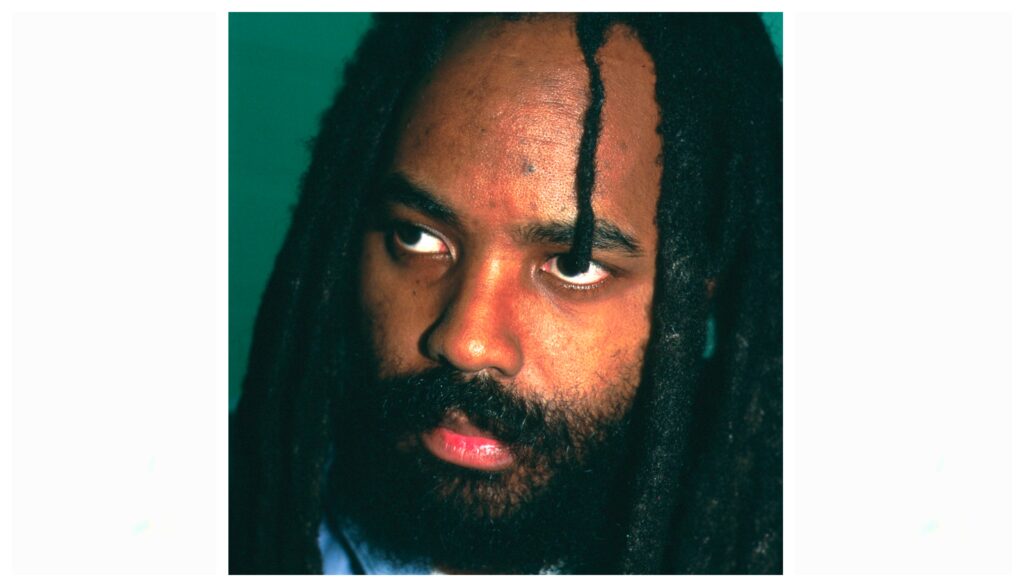
For more than four decades, one name has divided America, inspired activists and kept Philadelphia at the center of one of the nation’s most polarizing criminal cases: Mumia Abu-Jamal.
To supporters, the former journalist and Black Panther is a political prisoner whose unjust conviction is a clear example of racial bias, prosecutorial misconduct and the failures of the criminal justice system. To others–including the family of Philadelphia Police Officer Daniel Faulkner and many in law enforcement–he is a convicted cop killer whose conviction has withstood decades of appeals.
The debate has never truly ended. Now, Abu-Jamal’s legal team has taken his fight beyond U.S. courts, petitioning the United Nations Working Group on Arbitrary Detention to weigh in on his incarceration, according to the Guardian.
Whether viewed as a revolutionary, a journalist, a convicted murderer or a symbol of resistance, Abu-Jamal’s story reaches far beyond one courtroom. It remains a flashpoint in America’s ongoing reckoning with race, policing, the death penalty and what justice should look like.
RELATED: New Black Panther Party Emerges in Minneapolis Protests, but Everyone Isn’t Happy About It
Before He Was Mumia Abu-Jamal

Born Wesley Cook in Philadelphia in 1954, he grew up during an era defined by civil rights battles, racial unrest and growing Black political movements, according to the Washington Post. As a teenager, Cook became involved in activism and joined the Black Panther Party, where he worked as a communications figure and writer.
A Name Change

He began using Mumia after taking a high school course on African cultures. Years later, the birth of his son Jamal in 1971 inspired him to adopt the name Abu-Jamal, meaning “father of Jamal,” creating the identity by which he would become known around the world.
The Journalist
Abu-Jamal built a reputation as a radio journalist known for covering Philadelphia’s Black communities. He reported on issues involving police, poverty and political movements–work that made him respected by some and controversial among others, according to the Center for Constitutional Rights.
Philadelphia in the ’70s

It’s important to understand the political unrest bubbling in Philadelphia at the time.
Mayor Frank Rizzo, the former police commissioner with a history of using brutal policing tactics against Black communities, was in charge. Police tension with Black communities was high, and Philadelphia’s Black liberation movements–including groups such as MOVE–were under intense scrutiny from law enforcement. Most notably, Rizzo ordered the attack and bombing of MOVE’s Philadelphia home in 1978, according to PBS. While Abu-Jamal often covered these conflicts as a journalist, he was also involved in Black power organizations, including the Black Panther Party.
The Night Everything Changed

On Dec. 9, 1981, an incident involving Abu-Jamal, his 25-year-old brother, William Cook, and one police officer would change history forever. While Abu-Jamal’s legal team continues to question much of the police narrative surrounding the fatal shooting of Officer Daniel Faulkner, here is what we know happened…
Traffic Stop Turns Fatal
It began as a routine traffic stop in Center City Philadelphia. Officer Faulkner pulled over a Volkswagen Beetle driven by Cook, according to WHYY. At some point, a confrontation erupted between Cook and Faulkner. Nearby, Abu-Jamal–who was working part-time as a cab driver–saw the encounter and rushed across the street toward his brother. Moments later, gunfire rang out.
Faulkner was killed, and Abu-Jamal was left with a gunshot wound to the chest.
The Trial

In the 1982 trial, prosecutors argued Cook started the confrontation with Faulkner when Abu-Jamal jumped in. According to them, Abu-Jamal shot at the officer first, who then returned fire.
Abu-Jamal has long maintained that he did not kill Faulkner, however. He consistently said he witnessed another man– possibly a street vendor named Kenneth Freeman who worked alongside Cook– fire the fatal shots and that he was struck in the chest by Faulkner as he ran toward the confrontation.
A Fair Trial?
Critics of the trial have raised questions about jury selection, defense representation and courtroom conduct. Even organizations like Amnesty International have argued that the proceedings did not meet international fair-trial standards and called for a new trial.
Still, Abu-Jamal was convicted and sentenced to death, making his case one of the most controversial in modern history.
A Death Row Writer

While incarcerated, Abu-Jamal became known internationally for his essays, books and commentary about prisons, policing and American society. His writing turned him into a symbol for prison reform advocates. Celebrities, activists and academics joined calls for a new trial or release in the “Free Mumia” Movement.
A Different Story From Police Advocates

Law enforcement supporters and Faulkner’s family have rejected claims that Abu-Jamal was wrongly convicted. They argue the conviction was supported by evidence and that justice was served. In 2014, Faulkner’s widow, Maureen, told NBC10 she still deals with constant reminders of the man convicted of her husband’s murder.
“Thirty-two years later the Faulkner family, my family and I, have to endure the pain of him being able to speak in public and having rights,” she said. “Having a murderer, a radical, and someone who hates America to speak with them I think is so wrong.”
The Death Sentence Debate

For years, Abu-Jamal remained on death row. But after legal challenges to his death sentence, prosecutors agreed in 2011 not to seek another death sentence, leaving him with life imprisonment without parole, according to the New York Times.
Life in Prison

Abu-Jamal has spent more than four decades incarcerated at the State Correctional Institution- Mahanoy in Frackville, Pennsylvania, according to records. Like many aging incarcerated people, the now-72-year-old has faced serious health concerns while imprisoned, WHYY reported. His supporters have repeatedly raised questions about medical care and conditions behind bars.
A Signed Confession

Years into Abu-Jamal’s appeals, the case took another dramatic turn when Arnold Beverly came forward with an affidavit claiming he–not Abu-Jamal–was the man who fatally shot Officer Faulkner, according to a 2001 report from In These Times. Beverly alleged the killing was part of a murder-for-hire plot tied to organized crime and corrupt Philadelphia police officers running protection rackets in Center City.
Although Beverly first made those claims in 1999, Abu-Jamal’s legal team did not initially build its appeals around the affidavit, and courts have never accepted Beverly’s account as grounds to overturn the conviction. Since then, activists and civil rights leaders, including Attorney Johnnie Cochran, have shown their support for Abu-Jamal.
Abu-Jamal Returns to the Spotlight

Kuala Lumpur or commonly known as KL is the national capital for Malaysia and is the fastest growing metropolitan regions in South-East Asia. The urban city is also well known to the world for tourism and shopping. Kuala Lumpur has a great public transportation for people travel around the city. (Photo by Faris Hadziq/SOPA Images/LightRocket via Getty Images)
In 2026, Abu-Jamal has reportedly sought intervention from the United Nations Working Group on Arbitrary Detention, arguing that he has been imprisoned unfairly for decades, according to the Guardian. “Hope is an element of struggle, is it not?” he told the outlet. “As we used to say in the old days, ‘A luta continua.’”
Why His Case Still Matters

The debate over Abu-Jamal is also a debate about the criminal justice system itself. Conversations about how much trust people should place in the justice system and how courts should address racial bias remain integral to American politics and race relations today.
Like other Black liberation leaders, Abu-Jamal remains in prison serving out a life sentence without the possibility of parole. But he’s also become a symbol for a movement urging racial justice and equal rights.