
Too Bold to Be Free, Too Fierce to Be Broken: The High-Cost Defiance for Rubin ‘Hurricane’ Carter
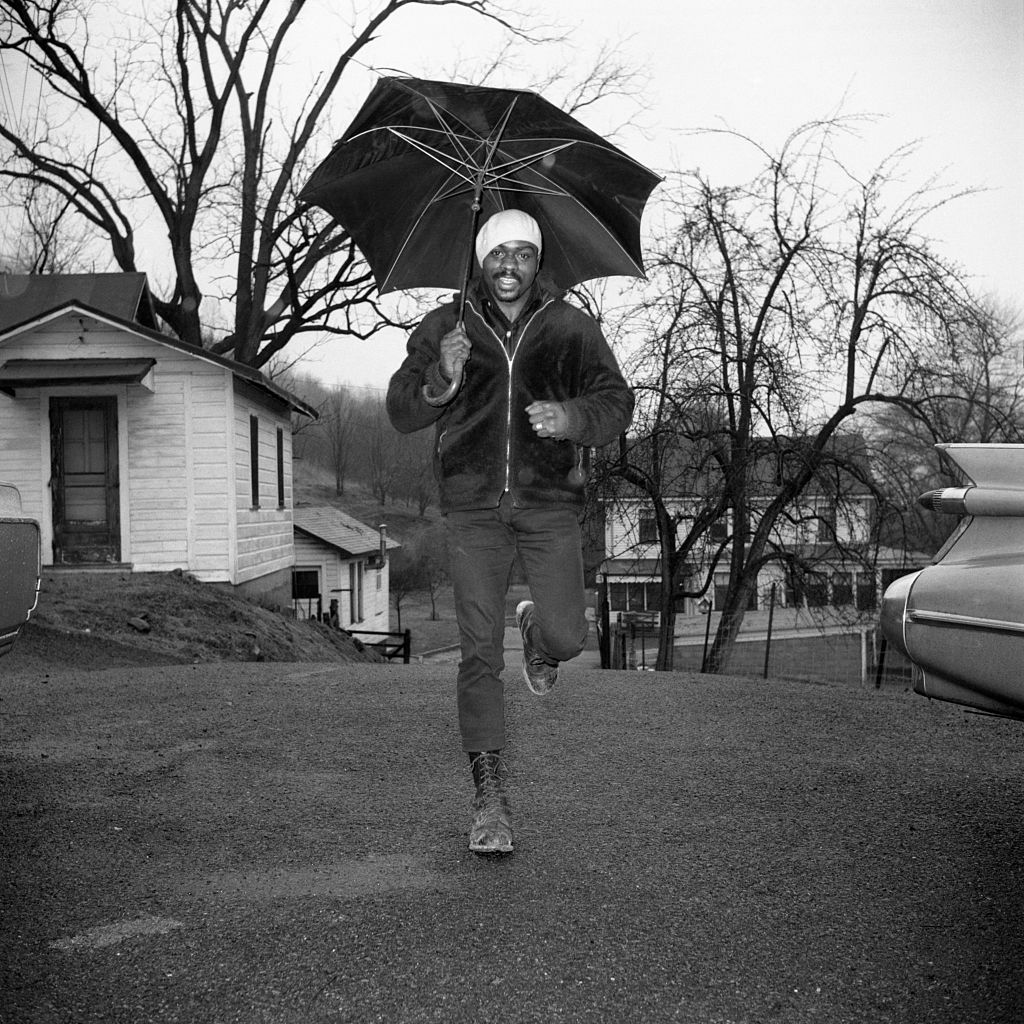
In 1966, Rubin “Hurricane” Carter didn’t just walk through the streets of Paterson, New Jersey; he vibrated through them. Behind the wheel of a shimmering silver Cadillac, draped in a sharp, tailored suit with an undeniable presence, he was the physical manifestation of a Black man the white establishment wasn’t prepared to handle.
He wasn’t interested in being nimble; he was a world-class middleweight boxer with a glare that could freeze a room. To the public, he was a champion with a preacher’s cadence, but to the state, he was a threat that needed to be neutralized.
For 19 years, when the steel doors of New Jersey’s Rahway State Prison slammed shut for a triple murder he didn’t commit, the state expected Carter to fold as just another number. They were wrong.
On what would have been his 89th birthday on May 6, we revisit the life of Rubin “Hurricane” Carter—a man the state tried to cage, only to find he was a storm they couldn’t contain.
Humble Beginnings

Rubin Carter’s life didn’t begin with a roar in 1937, but with a stutter and a struggle in the hard-knock industrial grit of Clifton, New Jersey. The fourth of seven children, he was a boy whose tongue couldn’t keep pace with his mind. His speech impediment made him an easy target in a world that didn’t tolerate what they perceived as a weakness.
His Introduction to Boxing

At 11 years old, Rubin Carter drew a knife when a man allegedly tried to sexually assault him. He was thrown into the Jamesburg Home for Boys in New Jersey for assault, but he was never meant to be contained. In 1954, he staged a daring escape, trading a concrete cell for Army combat boots and a ticket out of the country.
Shipped off to Germany after completing basic training in South Carolina, he found a place where he could funnel his emotions into physicality: the boxing ring.
The Silver Cadillac and the Seven-Second Storm

When Rubin Carter stepped into the ring, he was a terrifying composite of speed and unadulterated power, a middleweight who threw every punch like it was a vengeful response to a life of systemic weight.
As a personified hurricane, he became a symbol of unapologetic Black excellence and defiance. His 1963 demolition of the legendary Emile Griffith in under three minutes wasn’t just a knockout—it was a statement of sovereignty.
In the 1960s, Carter was untouchable, but unaware that the very establishment he terrified was preparing to snatch it all away.
The Arrest That Shook the World

The transition from boxing stud to criminal was as violent and sudden as one of his own left hooks. In the early hours of June 17, 1966, the silver Cadillac—a rolling symbol of Carter’s hard-won autonomy—was pulled over by police in Paterson, New Jersey, who were searching for two Black men responsible for the murder of three white men at the Lafayette Grill.
Despite a lack of physical evidence, no matching descriptions and a failed polygraph, the state refused to see a champion, but pictured a militant threat they could finally neutralize.
Trading the Belt for Shackles

The prosecution’s case rested entirely on the testimony of two career criminals, Alfred Bello and Arthur Bradley, who were in the middle of a burglary when the shots were fired, The New York Times reported at the time.
In a courtroom fueled by racial theater and coached witnesses, the Hurricane and an acquaintance, 19-year-old John Artis, were found guilty of the Lafayette Grill murders, a verdict that fell like a hammer on a Black man whose only crime was refusing to play small.
The state sentenced him to three consecutive life terms—a mathematical impossibility designed to ensure the rising boxer would never again be a free man.
19 Years Behind Bars

As he was led away in shackles, the Hurricane didn’t bow his head. Instead, he enacted a form of resistance. He famously refused to wear Rahway State Prison-issued denim, declined to eat the mess hall food and spent years in solitary confinement and mental isolation.
He spent his days in a 6×10 cell, battling extreme psychological warfare while reading law books and philosophy to refine his mind into a weapon more precise than any punch he had ever thrown.
Even as the state attempted to bury him in the silence of the hole, Carter’s voice ignited a global movement of activists and rock stars—most famously Bob Dylan, whose 1975 anthem “Hurricane” became a worldwide rallying cry for justice.
From Test to Testimony

In his self-imposed isolation, Carter swapped his boxing gloves for a typewriter. He channeled his explosive energy from the ring into the pages of his 1974 autobiography, “The Sixteenth Round,” which became a literary breakout that influenced the world and made his name synonymous with the struggle for human dignity.
“Hurricane is the professional name that I acquired later on in life. It provides an accurate description of the destructive forces that raged within my soul,” he wrote. “Carter is the slave name that was given to my forefathers who worked in the cotton fields of Alabama and Georgia, and was passed on to me. The name is like any other—worthless—but it’s the one that appears on my birth certificate.”
Retribution

In 1985, Federal Judge H. Lee Sarokin finally looked past the discrimination of the original trial, ruling that Carter’s conviction was built on “racism rather than reason” and “concealment rather than disclosure.”
Carter stepped into freedom with the measured, haunting stillness of a survivor who had successfully defended his soul, leaving the wreckage of a broken legal system behind him to begin the long, difficult process of reclaiming a life that had been paused for nearly two decades.
The Price of a Lie

For nearly 7,000 brutal days, the New Jersey legal system ground a Black man’s life into dust in a damning refusal to admit institutional errors. By the time Carter stepped into the sunlight of 1985, he had lost his athletic prime, his relationship with his family and his place in the world—or so they thought.
Flipping pain into purpose, Carter eventually received two honorary Doctorates of Law from York University and from Griffith University in October 2005 in recognition of his work with the Association in Defence of the Wrongly Convicted (AIDWYC). Carter also received the Abolition Award from Death Penalty Focus in 1996.
Restoration

Carter lived in the Toronto communal home with the advocates who helped secure his release, before moving out on his own. He eventually became a citizen of Canada and the executive director of the AIDWYC in 1993.
However, ten years later, Carter resigned from the organization after the organization refused to back his protest against the judicial appointment of Susan MacLean, the prosecutor responsible for the wrongful conviction of Guy Paul Morin, who served eighteen months for crimes he did not commit and was later exonerated by DNA evidence.
The Great Fallout

The fallout between Carter and the group of Canadians who helped free him—Sam Chaiton, Terry Swinton and Lisa Peters (whom he married in 1985 but claimed their marriage was never consummated)—was as complex as bitter. While they were the heroes who helped secure his freedom, their relationship eventually fractured into what Carter described as “another prison.”
Carter began to feel that the group was overbearing due to their “our way or the highway” mentality, according to James S. Hirsch’s biography, “Hurricane: The Miraculous Journey of Rubin Carter.”
Carter claimed he was rarely allowed to go anywhere alone and felt like a “trophy horse” used to fund the group’s activities, so he ended his marriage with Peters and broke all ties with the group.
“The Hurricane” (1993)

The story of Carter’s life eventually made its way to the silver screen when Denzel Washington transformed himself into the Hurricane in a performance that many—including Carter himself—considered the definitive portrait of his spirit.
Carter, who was famously selective about who he trusted, was mesmerized by the portrayal. During an early screening, as Washington delivered a searing courtroom plea for justice, viewers shouted, “Give that man his Oscar!” Speaking things almost into existence, Washington was nominated for the Best Actor award at the Academy Awards in 2000.
Despite having already secured the Golden Globe for the role, he ultimately lost the Oscar to Kevin Spacey for “American Beauty.”
The Hurricane’s Last Stand

Rubin Carter’s final fight wasn’t in a ring or a courtroom, but against a terminal diagnosis of prostate cancer in March 2012. Even as his body began to fail, the Hurricane remained a sovereign force, refusing to be a victim of his illness just as he had refused to be a victim of the justice system that cost him two prime decades of his life he could not get back.
At the age of 76, he died on April 10, 2014. His death wasn’t a defeat; it was the closing of a monumental chapter in Black history. He remains a towering icon of Black culture because he embodied the radical refusal to break under the weight of systemic oppression.