
ICE Is Quiet, but The Agency Has Now Planted Itself Into Daily Life
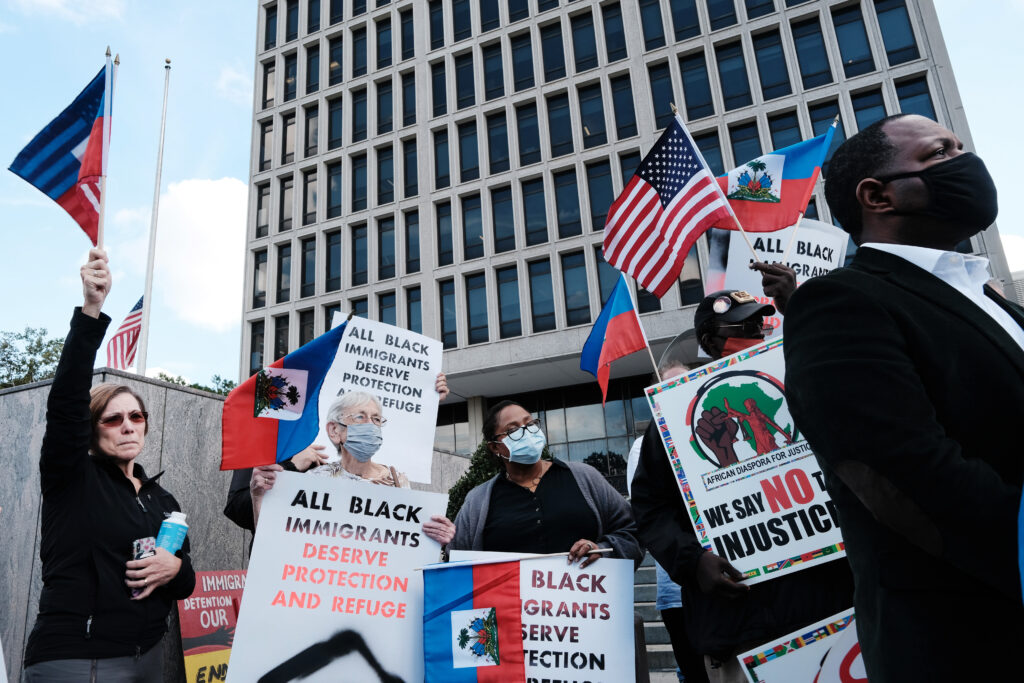
Despite public attention on Immigration and Customs Enforcement (ICE) dying down in recent months, the agency is quietly reshaping daily life far beyond the border. From Haitian immigrants in Ohio to university campuses, tax databases, and fake federal agent scams, ICE’s reach now extends into neighborhoods and airports across the country. What remains uncertain is just how much power the agency will ultimately hold–and where it goes next. Here’s what ICE is up to right now:
Haitian Immigrants in Springfield Placed on Ankle Monitors

Immigrant advocates say Haitian residents in Springfield, Ohio are facing increased pressure from ICE. Some Haitian immigrants in Springfield have reportedly been placed with ankle monitors while they await immigration proceedings, according to WCMH.
RELATED: Black America Reacts To The Rise Of Black ICE Agents
ICE and the IRS Battle Over Taxpayer Information

According to the Associated Press, ICE’s efforts to access IRS information sparked a legal battle over whether taxpayer data collected by the government can be used for immigration enforcement purposes. They reached an agreement back in May, but legal concerns have since been raised about the process. Critics warn the data-sharing agreement threatens taxpayer privacy and could discourage communities from filing taxes. Supporters say immigration authorities need access to information that can help enforce federal law.
HBCU Student-athlete Arrested on Campus
Johan Sandoval, a Dominican national and baseball player at Savannah State University, was detained after questions arose about his immigration status. His attorney said the situation stemmed from administrative errors involving paperwork rather than intentional violations. “It’s a bureaucratic mistake that has resulted in catastrophic consequences,” the attorney told The Current GA.
Investigation Finds Racial Slurs Were Used by ICE Agents

Court documents in a lawsuit over Los Angeles immigration operations reveal allegations that ICE and Border Patrol agents used racial slurs while discussing Latino immigrants during 2025 enforcement actions, according to the Guardian. The filings include text messages and body camera footage cited by civil rights groups as evidence of racial profiling and discriminatory stops.
Fake ICE Agents Allegedly Targeting Immigrants

Reports in several states have emerged of individuals allegedly impersonating immigration agents to intimidate, threaten and exploit immigrant communities, according to NBC News. Advocates say the problem is especially dangerous because many immigrants may already be hesitant to seek help, report crimes or interact with authorities because of concerns about their immigration status.
Advocates Issue ICE Travel Advisories

Legal advocates, including Coalition for Humane Immigrant Rights (CHIRLA), have issued a travel advisory for people with unresolved immigration cases to understand their rights before traveling, including carrying important documents and knowing what to do if approached by immigration officers, according to FOX 11 News.
Salvadoran Man Dies in Delaney Detention Center

A 41-year-old Salvadoran man, Edwin Lopez-Cornejo, died after suffering a “medical emergency “while in ICE custody at the Delaney Hall detention center in Newark, New Jersey, according to ABC News. ICE said Lopez-Cornejo received appropriate medical treatment, while the cause of death remains under investigation.
Judge Reignites Mask Ban Debate in NY

A federal judge temporarily blocked parts of a New York law that would have barred ICE agents from wearing masks and required visible identification during operations, according to Fox News. The court ruled the federal government is likely to succeed in arguing the state cannot regulate how federal immigration officers perform their duties.
Contaminated Drinking Water Allegedly Exposed in ICE Facilities

Attorneys for a detainee at California’s Adelanto ICE Processing Center released a video showing what appear to be worm-like creatures floating in drinking water, raising new concerns about conditions inside the facility, the Guardian reported. The footage surfaced just days after a federal judge ordered ICE to provide detainees with 24-hour access to clean drinking water. DHS said the facility’s water meets safety standards, while advocates argue the video raises questions about compliance with the court order.
UMD Professor Detained by ICE
Dr. Berhanu Kibret, a University of Maryland School of Pharmacy instructor who had just received a Teacher of the Year award, was detained by ICE at Dallas-Fort Worth International Airport after a work conference, according to CBS News. The university said he has valid work authorization, while DHS alleges he overstayed his visa and is in the U.S. unlawfully pending immigration proceedings.
ICE Buying Private Prisons

The Trump administration is increasingly relying on private prison companies to rapidly expand ICE detention capacity as it pursues its mass deportation agenda, TIME Magazine reported. Rather than building new facilities, ICE is acquiring or reopening privately operated detention centers across the country, a strategy supporters say speeds enforcement but critics argue deepens the government’s dependence on for-profit incarceration.
Springdale Becomes Protest Hotspot

A Public Source investigation found that Springdale, Pennsylvania, has become a flashpoint over immigration enforcement after local police partnered with ICE through a 287(g) agreement. Combined with a controversial data center project, the partnership has sparked protests, allegations of government secrecy and growing concerns about policing, accountability and the treatment of immigrant residents in the small Pittsburgh suburb.
Trump Admin Increases Conspiracy-related Criminal Charges

An NPR investigation found that the Trump administration is increasingly pursuing conspiracy-related criminal charges against immigrants accused of helping others enter or remain in the U.S. illegally. Prosecutors are using conspiracy laws to seek harsher penalties, while defense attorneys argue the strategy broadens criminal liability and risks sweeping in people with limited involvement.