
What Does Home Mean to Black Women? This Martha’s Vineyard Exhibit Has an Answer
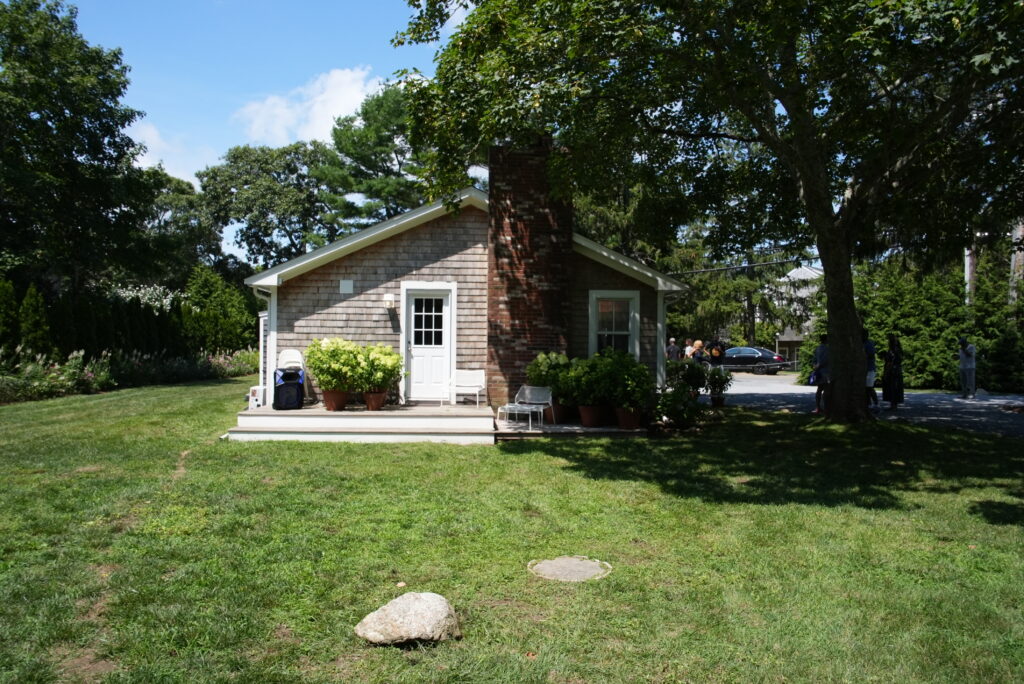
There is no sterile white gallery wall separating the art from everyday life. Instead, imagine walking through bedrooms in Oak Bluffs on Martha’s Vineyard, encountering work by Black women artists in rooms devoted to themes such as protection, nurturing, memory and water.
Curated by Jade Flint and artist Taylor Thomas, and presented by Long Gallery Harlem, “A House Is Not a Home” brings together 25 Black women artists to examine America’s 250-year history through the women whose labor, care and creativity helped build it, even when that work went unnamed or unrecognized.

“As we were approaching the 250th anniversary of America, we knew that there were going to be these very idealized, romanticized ideas about how this country was founded,” Flint told The Root as she walked through the exhibition.

Flint and Thomas wanted to offer another way of remembering America: by centering Black women not simply as witnesses to the country’s history, but as people who made the country what it is. The exhibition looks beyond the physical work of maintaining a home to what Flint calls the “emotional scaffold” required to keep families and communities together.
Attendees have a chance to experience the work inside an actual house, specifically Thomas’s parents’ home. One room is dedicated to the many identities Black women carry at once: mother, wife, professional and caretaker, coupled with the challenge of maintaining an individual sense of self through all of those transitions. Another room examines protection. One work references “The Negro Motorist Green Book,” which once helped Black travelers identify places where they could safely eat and move through the country. The piece is called “Safe Places” by Katharen Wiese, and uses handmade cotton paper arranged in a collage. Then there’s a room devoted to the relationship between Black people and water.

“Since we’re on Martha’s Vineyard, [we wanted to be] really talking about Black people’s relationship to water. And given the fact that we came here through the transatlantic slave trade, we could have continued to have a very traumatic relationship with water, and many of us still do. But being on this island, we wanted to highlight to people that Martha’s Vineyard hasn’t been a haven for Black people in the last few decades. Black people have been here since the 19th century, starting with the Black whalers, also their wives, who made this place a home that we know it to be now,” Flint said.
Many who have seen the exhibit have felt an immediate sense of recognition.
“We’ve gotten tears, we’ve gotten joy,” she said. People have shared stories about their own mothers and their own experiences as wives and mothers.
“A House Is Not a Home” is in its final week at Martha’s Vineyard, and all the works are for sale.