
These Cities Are On The Verge of Reparation Success
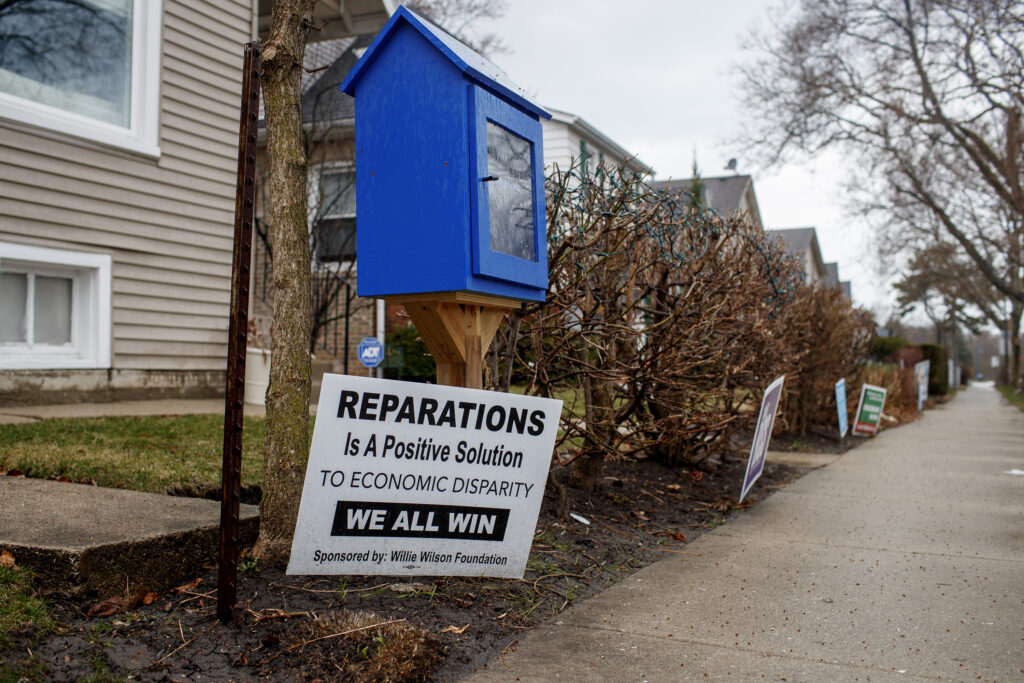
It’s no secret that reparations have become one of the most debated local policy efforts in the country. Still, around the U.S., local leadership and activists are banding together to deliver what they say is just payment to the descendants of chattel slavery.
“It’s a misunderstood word,” Kristal Brent Zook, the author of “Tulsa Speaks: A City Council, Reparations, and Race in America Today,” told us in an exclusive interview. She insists the concept is often reduced to cash payments, even though it can include a wide range of policies intended to address historical harm. “People don’t understand, it can mean a lot of things, and it can mean things specifically to repair the damage that was done,” she added.
Local momentum continues in cities like San Francisco and Evanston, Ill.– the first city to hand out reparations tied to slavery. And although lawsuits and political pushback has worked to slow progress, Zook told us several cities are on the verge of making the impossible come true.
“That’s why reparations is having more success,” the author added. “Because when people are forced to look each other in the eye and face up to whatever their town’s history is, they seem to be wanting to move forward and do the right thing in a lot of places.”
Now, we’re looking at some of the many reparations efforts happening around the country, from the largest American cities to the smallest towns.
Evanston, Ill.

Evanston, Illinois, broke new ground in 2021 by launching the nation’s first municipal reparations program, providing eligible Black residents and their descendants with housing-related grants of up to $25,000. The initiative was created to address the lasting effects of discriminatory housing policies that affected Black families throughout much of the 20th century.
Since its establishment, the program has distributed millions to recipients and has often been cited as a model for local reparations efforts nationwide. However, it is now facing one of its most significant legal challenges. In June 2026, the U.S. Department of Justice joined the ongoing federal lawsuit against the city, arguing that the program’s race-based eligibility requirements violate the Equal Protection Clause and the Fair Housing Act. City leaders, however, continue to defend the initiative.
Providence, R.I.

Providence, Rhode Island, has launched a $10 million reparations program aimed at addressing the lasting impacts of slavery and systemic discrimination against Black and Native American residents, ABC News. The initiative uses federal COVID-19 relief funds and focuses on investments in areas such as small-business support, job training, and financial literacy rather than direct cash payments.
City officials say federal rules require the program to be “race neutral,” meaning eligibility is based on income and neighborhood rather than race, allowing some non-Black residents to qualify. Still, Rodney Davis, chair of Providence’s reparations commission, told ABC News, this framework was necessary to reach the people.
“The federal guidelines basically forced us to have to look at census tracts. And one of those impacted communities were those who were economically disadvantaged,” Davis said.
Asheville, N.C.

The City of Asheville established its Community Reparations Commission in 2022, building on a 2020 resolution that endorsed reparative efforts for Black residents. However, the initiative later faced federal scrutiny. Following the DOJ’s objections, reported by the Asheville Watchdog, the commission halted its work and ceased meeting after June 30, 2024.
Tusla, Okla.

More than a century after the 1921 Tulsa Race Massacre, city leaders launched the Beyond Apology Commission to study possible reparations for survivors, descendants and residents of North Tulsa, BBC reported. The commission will examine ways to address the lasting damage caused when a white mob destroyed the thriving Greenwood District, known as Black Wall Street, killing as many as 300 Black residents and leaving thousands homeless.
Mayor G.T. Bynum said the effort is intended to move beyond symbolic apologies and produce actionable recommendations, including potential housing programs aimed at building generational wealth. The commission’s findings will help guide future city policy.
Detroit

Detroit’s Reparations Task Force– established in 2021– delivered a long-awaited report outlining ways the city could address harms caused by decades of discriminatory policies affecting African American residents last year. The recommendations include cash payments, housing grants, business assistance, expanded African-centered education, police reforms and an end to residential water shutoffs.
To qualify, recipients would need to be descendants of enslaved Africans, at least 21 years old and longtime Detroit residents. The report also proposes creating a city office to oversee reparations programs and suggests new revenue sources to fund them.
Decatur, Ga.

The city of Decatur, Georgia, established a reparations task force in May 2025. A resolution to address discrimination and the economic impact of slavery was first brought to the city’s attention last year in the Beacon Hill community.
The 11-member task force is set to investigate Black property loss while also aiming to make policy recommendations to help Black residents recover from the generational issues of slavery. They have three years to produce a final report, Fox 5 News reported.
Tullahassee, Okla.

Though home to only about 115 residents, Tullahassee, Oklahoma, has taken an active role in the national reparations movement, proving that size does not matter. In 2021, town leaders joined efforts to advocate for reparations for descendants of enslaved people, and the mayor later became involved with Mayors Organized for Reparations and Equity, a coalition of local officials supporting restorative policies, according to NPR.
New York

New York’s reparations commission was created after Gov. Kathy Hochul signed legislation in December 2023 establishing a formal study of reparations. The effort emerged in the wake of George Floyd’s 2020 killing and was intended to produce recommendations for addressing historic harms suffered by Black New Yorkers, according to the Washington Times. The commission’s deadline to produce a report has now been extended to 2029, citing a shifting political landscape over diversity, equity and inclusion (DEI) initiatives and debates over how Black history is taught.
Still, the commission held its final public hearing May 30, giving residents, advocates and scholars a chance to weigh in on how the state should address the legacy of slavery and racial discrimination, the outlet reported.
San Francisco

San Francisco Mayor Daniel Lurie signed an ordinance creating a reparations fund for Black residents back in January, but the city isn’t putting any taxpayer money into it. Instead, the fund creates a framework for future payments if private donations become available, according to KTVU News. Lurie said San Francisco is dealing with a major budget deficit and remains focused on priorities like public safety and city services.
Chicago

Chicago Mayor Brandon Johnson announced plans to create a reparations task force ahead of the 2024 Juneteenth holiday, framing it as an effort to confront the city’s long history of inequality and systemic harm. He described the initiative as a commitment to “shape the future of our city” by addressing long-standing disparities in Chicago.
In April, the mayor’s office released additional details and opened applications for residents interested in serving on the panel, WTTW reported. The application period closed in May, marking the next step in the city’s effort to formally organize the group.
Boston

Boston’s reparations effort is moving into a key new phase as the city prepares to release long-awaited research on slavery and racial discrimination, according to The Boston Globe. The Task Force on Reparations is close to completing two major reports–one examining Boston’s role in the trans-Atlantic slave trade and another focusing on systemic discrimination against Black residents in the 20th century.
City officials say the findings will help shape future recommendations on possible reparative policies. However, delays have frustrated some community members, who argue the process lacks urgency. On the other hand, officials say careful review is needed, given the scope and historical weight of the work.
Baltimore

A power struggle between Baltimore City Hall and the city’s Community Reinvestment and Reparations Commission over how funding could be distributed has caused delays in Baltimore, too. But advocates are not slowing down on their efforts to deliver reparations.
The commission was created in 2024 to guide spending on impacted communities. Funding would come from the more than $35 million in cannabis tax revenue meant for reparations tied to the harms of the War on Drugs, according to The Baltimore Beat.
St. Paul, Minn.

St. Paul, Minnesota, is moving forward with efforts to explore reparations for descendants of enslaved people through a newly created advisory commission, according to Fox 9 News. The St. Paul Recovery Act Community Reparations Commission will advise the mayor and City Council on policies and budget priorities aimed at addressing racial disparities tied to slavery and systemic racism.
The commission’s focus includes building generational wealth and improving outcomes in housing, education, health care and economic opportunity for Black residents.