
The Science Behind Why Black Folks Call Each Other ‘Cousin’
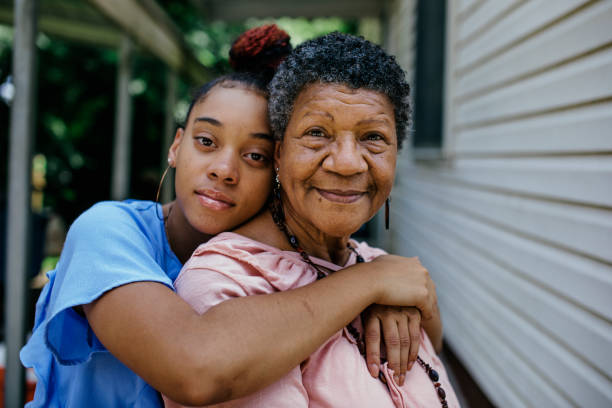
For generations, Black Americans have always understood that family isn’t determined by blood alone. We, as deeply communal people, have built lifelong bonds through loyalty, shared cultural experiences, mutual support, and simply showing up for one another. Now, new research from the Pew Research Center puts data behind our long-standing cultural reality: Black folks are more likely than other groups to consider non-relatives part of their family—proving that inviting folks to the cookout might be more sociological fact than internet banter.
From church aunties to play cousins, or family friends your relatives unofficially adopted, Black people have long extended the meaning of kinship beyond biology. To better understand this dynamic, the research center surveyed 4,271 Black adults and 2,555 adults of other races and ethnicities in June 2025. And judging by the stats, it’s truly giving: “In the clurb, we all fam.”
Our Wide Family Networks
Among Black adults, 77 percent report having at least one non-relative they consider family—often someone with whom they share childhood experiences, religious beliefs, identity markers such as race or gender, or other shared commonalities. By comparison, a smaller share of non-Black adults (63 percent) say they have a non-relative they view as family.
“I’m rocking with Mark because Mark is rocking with us” isn’t just internet humor—it reflects a deeper truth about how Black communities define love and loyalty, sometimes even for generations to come.
Multigenerational Family Bonds

But the bonds don’t stop at “play cousins” and honorary family members. Black Americans are also far more likely to maintain deep connections with extended relatives compared to our American counterparts. We all have that older cousin we respectfully call “auntie,” first and second cousins who feel more like siblings, uncles who step into parental roles when the children are cutting up, and grandparents who anchor entire family systems across generations.
The data backs this up as well. Black Americans are more likely than other U.S. adults to feel close to extended family members, including grandparents (48 percent versus 33 percent), cousins (42 percent versus 20 percent), and aunts or uncles (36 percent versus 19 percent). Furthermore, Black Americans are significantly more likely to turn to these extended family members for emotional support during times of need.
Financial and Emotional Support Isn’t Far Behind

While Black Americans are more likely to report financial strain, we’re also more likely than other Americans to financially support our family members. According to the research center, 59 percent of Black adults say they personally gave money or financial assistance to their parents or other family members in the year before the survey. By comparison, 42 percent of other Americans report doing the same.
This support doesn’t come without sacrifice. About half of Black adults who gave money to family say it negatively affected their own financial situation at least somewhat (51 percent), including 25 percent who say it hurt a great deal or a fair amount. By contrast, a smaller share of non-Black adults who provided financial support report the same level of financial strain (35 percent).
Furthermore, the patterns of emotional support are just as layered. Black adults under 50 are more likely than older Black adults to provide emotional support to family members. Meanwhile, younger Black adults are just as likely to receive that same emotional support from within their families. Gender also plays a role here: Black women—particularly those under 50—are more likely than Black men to both give and receive emotional and financial support within their families.
Brothers and Sisters by Bond… Not Just Blood

In the Black community, terms like “brother” and “sister” are a core part of how we relate to one another, and the stats back this up. Across the U.S., 58 percent of Black folks say they generally consider other Black folks to be their brother or sister. In addition, nearly 80 percent reported feeling some sort of responsibility to look out for other Black folks. 39 percent feel this extremely, or very often, while another 39 percent feel this somewhat often.
These patterns go deeper than tradition — they reflect how we actually understand kinship beyond biology, obligation, or proximity. Whether it’s family we’re born into or the people we choose to keep close, Black communities have long defined connection through care, loyalty, and looking out for one another. And in that way, “family” has always been something we live out in everyday life with care and intention, going far beyond an arbitrary title.