
The Rich Political History of Black Voting Districts Where Rights Are At Risk
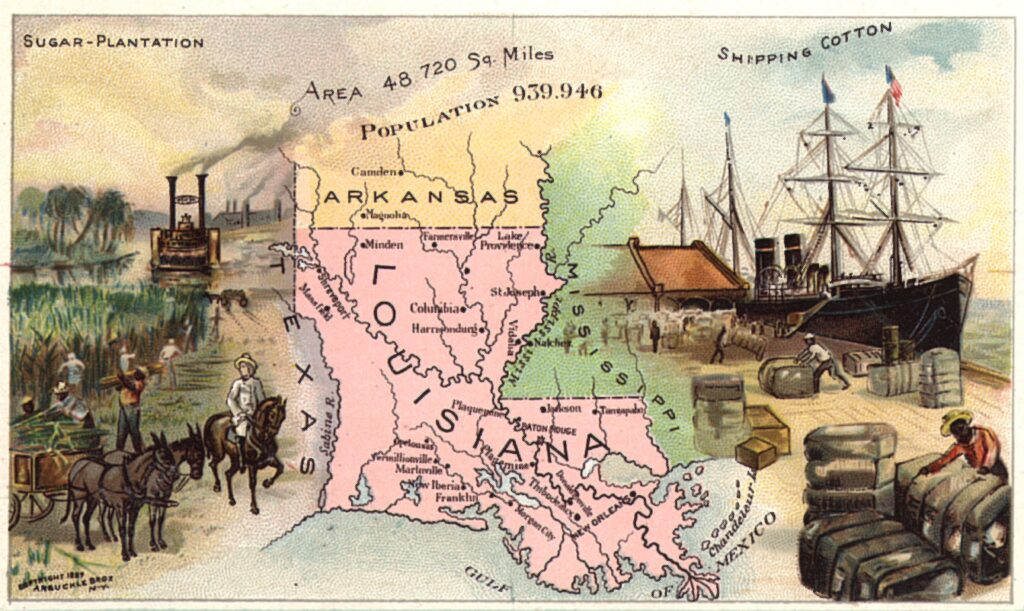
The fight over Black political power in the South continues to unfold across states haunted by slavery, segregation and generations of resistance. From Louisiana’s former sugar plantations to the streets of Memphis, Atlanta and Charlotte, which later became battlegrounds for voting rights and civil rights activism, many of the congressional districts now at the center of unprecedented redistricting efforts were also the setting of some of the darkest and most defining chapters in Black American history.
Just last week, Louisiana lawmakers advanced a congressional map that would dismantle one of the state’s two majority-Black districts, reigniting debates over representation in a region where Black folks helped build the wealth of the South through chattel slavery. It took only a few generations for their fight for equal political power to begin to crumble. Now, we’re looking at the historic contributions made in each state, where Black political districts are now at risk of being diminished.
LA-02: Ties to ‘White Gold’ and Slavery

Just last week, Louisiana senators advanced a bill that eliminates one of two original majority-Black districts, WWNO reported. The original District 6 and District 2 served Black residents from Baton Rouge to New Orleans, both cities that have strong historic ties to chattel slavery and the Civil Rights Movement.
During the height of slavery in the 19th century, Louisiana acted as a major hub for enslaved sugar farmers. Known as “white gold,” the production of sugar in the South played an instrumental role in the often barbaric physical demand for enslaved labor, the New York Times reported. It’s impossible to know exactly how many slaves worked in New Orleans or Baton Rouge because of inaccurate slave records. Fast forward to the Civil Rights Movement, and these major cities played an active role in the historic Civil Rights Movement.
LA-06: Activists March 105 Miles to Baton Rouge

In 1967, A.Z. Young and Robert Hicks, two Black civil rights activists from Bogalusa, La., marched over 105 miles to the state Capitol building to protest continued violence against Black folks, according to the Civil Rights Trail. Their march came just one year before Dr. Martin Luther King Jr.’s assassination and only two years after the historic Voting Rights Act.
MS-02: Mississippi Plantation Frozen in Time

Rep. Bennie Thompson has been outspoken against targeted efforts that threaten his congressional seat. He called the GOP-led effort the “equivalent to a second Civil War.”
Known as the largest octagonal home in the nation, Longwood was built by enslaved Black men and women alongside folks hired from the North, according to Visit Mississippi. Work on the massive estate abruptly stopped in 1861 as the Civil War began, leaving much of the mansion’s interior unfinished and preserved as a snapshot of that era.
NC-12: Ishmael Titus, Revolutionary War Soldier

Charlotte is the largest city in North Carolina, where Rep. Alma Adams serves. Even though her district is at risk, the city’s deep ties to Black history cannot be denied.
Ishmael Titus was a Black man born into slavery in Virginia but was later sold to a pair of brothers in North Carolina. He later became a soldier during the Revolutionary War, when he was awarded his freedom, according to the American Legion.
NC-12: Slaves Made up 40% of Charlotte’s Population

Slavery was introduced to the city, which includes Mecklenburg County, in 1764, according to the Landmarks Commission. And by 1860, the entire county was made up of about 40 percent enslaved. Still, there were a couple of hundred free Black folks who were able to establish their own little community with clear restrictions. By the time the Civil War broke out, hundreds of Black slaves were “donated” to serve in the Confederate army.
NC-12: Black Neighborhoods Targeted in ’60s

Fast forward to the 1960s and ’70s, when the spirit of the Civil Rights Movement had reached the city of Charlotte. However, centralized Black spaces were quickly and consistently met with backlash from state officials. During this time, the Charlotte Redevelopment Commission moved to completely redevelop declining neighborhoods, the UNC Charlotte J. Murrey Atkins Library reported. But– surprise, surprise– that task largely targeted Black neighborhoods in Second Ward, which was Charlotte’s largest African American community. Over 1,000 Black families were displaced following the demolition.
GA-05: Black Music Boom in Atlanta

We previously told you, Ga. Gov. Brian Kemp promised no new maps would be drawn in the state ahead of the November midterms. Still, by 2028, Republicans plan to develop a new map that could impact several Black-led districts, mostly centered in Atlanta.
You can’t mention Black history without mentioning one of the great epicenters for the Civil Rights Movement, Atlanta. The capital city gave birth to leaders like Dr. King and also has deep ties to Southern Black music and culture. For example, the iconic 81 Theater was once a hub for Black musicians like Thomas A. Dorsey– the father of Gospel Music— and even Ma Rainey often performed for segregated crowds. The theater was closed in 1965 to make room for Georgia State University’s growing campus.
Still, you can feel the rhythm of Black history echo throughout the streets of Atlanta. Just a short distance away is Auburn Avenue, which was Atlanta’s “Black Wall Street,” according to Discovering Atlanta. Dr. King was born on the same street.
GA-02: Macon’s Cotton Ave

Nearly two hours away in Macon, another Black Democrat, Rep. Sanford Bishop, is at risk of losing control of his district. He represents parts of Columbus and Macon, the latter of which is home to the historic Cotton Avenue. The Black business hub gets its name from the early 19th century, when enslaved Blacks would transport bales of cotton up and down the banks of the Ocmulgee River, according to 13 WMAZ.
TN-09: The Legacy of the Lorraine Hotel

In Memphis, political tensions have left the Black city fractured following the state’s passing of a new district map, which axed Black-led districts in the city. We previously told you all state Democrats were removed from their committee duties following their demonstration against a vote on the gerrymandered maps. And this wouldn’t be the first time the city of Memphis has risen to national attention over concerns of civil rights and Black history.
As you probably already know, the Lorriane Hotel in Memphis is where Dr. King was assassinated in 1968. But outside of that, the city is also home to LeMoyne-Owen College, the only historically Black college (HBCU) in Memphis. According to the school’s website, LeMoyne-Owen is a merger of LeMoyne College, which was founded during Reconstruction, and Owen College, two private, church-affiliated HBCUs.
TN-09: 1968 Sanitation Workers’ Strike

The same year King was killed, Black sanitation workers went on strike after two garbage collectors, Echol Cole and Robert Walker, were crushed to death by a malfunctioning truck, according to the U.S. Department of Labor. On the eve of his assassination, Dr. King launched his support for Black workers.
“I read the articles. They very seldom got around to mentioning the fact that one thousand, three hundred sanitation workers are on strike, and that Memphis is not being fair to them,” he said during his “I’ve Been to the Mountaintop” speech. “We’ve got to give ourselves to this struggle until the end. Nothing would be more tragic than to stop at this point in Memphis. We’ve got to see it through.”
AL: 07: Birmingham’s Integrated Theater

In Alabama, a panel of three federal judges ordered the state to keep its current congressional map until 2030. But almost a year after the decision, state officials have cleared a path for a new redistricting scheme. That puts the seats of Rep. Terri Sewell of Birmingham and Rep. Shomari Figures of Mobile at risk.
The Lyric was one of the first theaters in Birmingham where white and Black audiences sat down to watch the same show at the same time. However, segregation laws required African American attendees to use a separate exterior entrance and sit in a designated balcony area.
AL-02: The Story of The Clotilda

On a summer night in 1860, a slave ship quietly entered Mobile Bay carrying 110 Africans who had been kidnapped and trafficked into slavery. The vessel, the Clotilda, is recognized as the last known slave ship to reach the U.S. It arrived more than five decades after the trans-Atlantic slave trade had been banned. After slavery, the survivors later built lives as free people and founded Africatown, a self-sustaining community north of downtown Mobile where they preserved many of their African customs, traditions and cultural ties.