
Expert: How the Ultra-Right Supreme Court Was Built Over Decades
For generations, the U.S. Supreme Court has stood strong as one-third of the precious checks-and-balances system, which has protected democracy. Now, after controversial rulings under a 6-3 conservative majority, concerns continue to rise over the court’s ability to be impartial.
The Root spoke to Stephen Spaulding, the managing director of the Kohlberg Center at the Brennan Center, and David Daley, author of “Antidemocratic: Inside the Far Right’s 50-Year Plot to Control American Elections,” who both outlined the decades-long story behind how the high court has become what we know today.
Justices Weren’t Always Picked Based on Party

“Certainly, presidents have long chosen justices with whom they feel an ideological affinity. But I would suggest that some things have changed over the years,” Daley said. He first pointed to Justice John Paul Stevens, who was nominated by Republican President Gerald Ford but served much of his term as a liberal.
How Justice Souter Changed the Republican Party

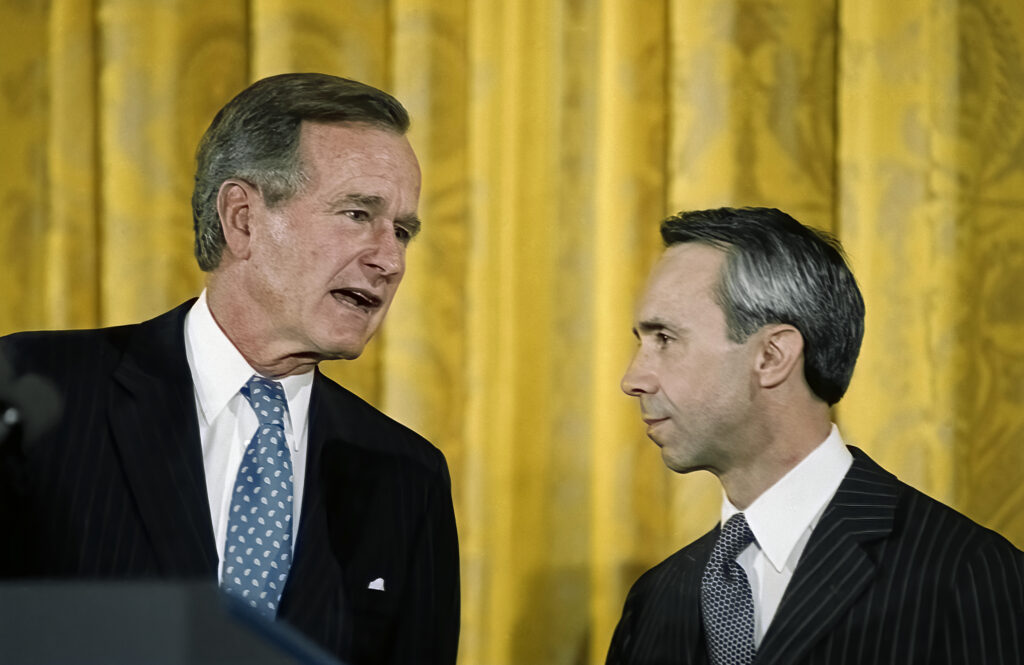
Things, however, changed around 1990, when former Justice David Souter was picked by Republican President George H. W. Bush. During his term, Souter’s views were widely liberal. He was a defender of LGBTQ+ rights, abortion and the separation of church and state– all of which left a bad taste in the GOP’s mouth.
“Republicans within the conservative legal movement did not know David Souter. And they were deeply disappointed in the way he ruled on the bench– largely as a liberal and not as a conservative over his years,” Daley told us. “And so Republicans vowed that there would be no more Souters.”
Clarence Thomas Confirmed 1991

One year after Souter was confirmed, President Bush nominated Clarence Thomas to the court. Although Thomas was riddled with controversies– including sexual assault allegations from attorney and law professor Anita Hill— he was confirmed as a staunch Republican in 1991.
As of May 7, 2026, Thomas is now the second-longest-serving justice in Supreme Court history. If he stays in his position until May 20, 2028, he will overtake the late Justice William O. Douglas, who served 36 years and 209 days.
Chief Justice John Roberts Confirmed 2005

John Roberts was confirmed as chief justice in 2005 after being nominated by then-President George W. Bush. Roberts replaced Chief Justice William Rehnquist, who died while serving on the court. At age 50, Roberts became one of the youngest chief justices in U.S. history. He pledged to serve as a modest judge who would apply the law rather than shape policy, emphasizing respect for precedent and judicial restraint.
How Roberts Changed the Supreme Court

Many people attribute the current state of the court to Roberts’ leadership. According to Spaulding, “Since Chief Justice Roberts became the Chief Justice, there’s been a sea change, particularly when it comes to laws that are intended to protect our democracy and ensure that everyone has equal political representation.”
Shelby County v Holder 2013

In Shelby County v. Holder, the Supreme Court struck down a key part of the Voting Rights Act of 1965. In a 5-4 ruling, the formula used to determine which states and local governments needed federal approval before changing voting laws was gutted. Chief Justice Roberts wrote that the formula relied on outdated data and violated principles of equal state sovereignty. Justice Ruth Bader Ginsburg dissented, arguing voting discrimination still existed. The decision effectively ended the federal preclearance system, prompting states to enact new voting regulations.
Debates Over Term Limits

Debates over Supreme Court term limits center on whether justices should continue serving lifetime appointments. Supporters argue fixed terms, often proposed as 18 years, would reduce political battles over nominations, create regular vacancies and make the court more accountable to modern public opinion. Meanwhile, critics say lifetime tenure protects judicial independence by insulating justices from political pressure.
“The Supreme Court is the only high court among major constitutional democracies that gives life tenure to its justices,” Spaulding told us. He also pointed out that on the state level, 49 states– with the exception of Rhode Island– dictate term limits for their Supreme Court systems.
Trump Takes Office

When President Donald Trump assumed office in 2016, he also ushered in a new type of Republican Party. Under his leadership, Spaulding and Daley told us the Supreme Court has also leaned towards the right. And it’s largely due to Trump hand-picking three of the current Justices.
Trump’s SCOTUS Nominations

During his first term, President Trump nominated three justices to the U.S. Supreme Court: Neil Gorsuch, Brett Kavanaugh and Amy Coney Barrett. Their confirmations created a conservative 6-3 majority on the court. The nominations intensified partisan debates over judicial ideology, Senate confirmation rules and the court’s role in major constitutional issues.
Biden Nominates Ketanji Brown Jackson

In 2022, President Joe Biden nominated Ketanji Brown Jackson to replace retiring Justice Stephen Breyer. Jackson, a federal appeals court judge and former public defender, became the first Black woman nominated to the nation’s highest court. Her appointment fulfilled Biden’s campaign promise to diversify the court and marked a historic milestone in Supreme Court history.
Controversial Rulings

In recent years, the Court issued several controversial rulings that reshaped major aspects of law and politics. In Dobbs v. Jackson Women’s Health Organization, the Court overturned Roe v. Wade, ending the federal constitutional right to abortion and allowing states to set their own abortion laws. In Students for Fair Admissions v. Harvard, the Court struck down affirmative action in college admissions, ruling that race-conscious admissions policies violated equal protection principles.
Recently, the court faced backlash after gutting Section 2 of the Voting Rights Act of 1965. Critics say these decisions reflect a conservative ideological shift which have politicized the Court, while supporters say the rulings restore constitutional limits and individual rights.
Can the Supreme Court Return to Democratic Norms?

According to NBC News, recent polls show public trust in the Supreme Court has fallen to a new low. Still, Spaulding told The Root it’s going to take a joint effort by Congress and Americans to return to a sense of normalcy.
“The balance of powers and checks-and-balances have really been askew,” he told us. “There are steps that the court can do to strengthen public confidence. But what it’s going to ultimately take is citizen mobilization and citizen action demanding this progress.”