
Are Black Church Choirs Dying? The Rise of Praise Teams Explained
Remember when the church choir was the highlight of Sunday service? Some of the greatest voices of our time, from Whitney Houston to Aretha Franklin, honed their gifts in these powerful sacred spaces. Out of that same tradition came unforgettable gospel moments like “Oh Happy Day,” recorded by The Edwin Hawkins Singers, and “Stomp” by Kirk Franklin and God’s Property. But today, folks can’t help but notice a shift in the Black church — one that seemingly renders iconic Black choirs, as we once knew them, a thing of the past.
Enter the rise of contemporary bands, or more specifically, “praise teams”: groups of roughly six to ten worshippers leading contemporary Christian music with what one can describe as a campfire-like vibe, in place of stages once dominated by dozens of basses, sopranos and altos filling the building with full-bodied harmonies that seemed to radiate through your chest. If you’re missing the energetic choir director, those matching robes, and ground-shaking worship, you aren’t alone.
So what changed, and why are so many Black churches moving away from the traditional choir? According to Huan Walker, a seasoned musician at Life Change Church with 20 years in church music ministry, the shift didn’t happen overnight, but instead unfolded gradually over time.
COVID-19 and the Collapse of the Choir

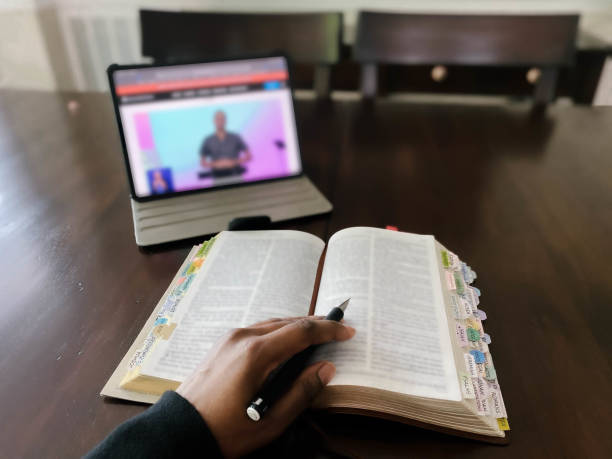
When the COVID-19 pandemic hit in 2020, Black churches felt the impact immediately. Along with taking prayers to the phone lines, choirs could no longer rehearse, perform or stand within six feet of one another, for that matter. Churches had to scale down quickly and efficiently, turning to smaller worship teams and individual singers to keep services running — if they ran at all. While this began as a response to the crisis, the disruption reshaped the sound of worship altogether, and some choirs never returned to their former strength.
For many worshippers, it marked a significant loss in the tradition of Black church music.
“There was a shift in the 2010s, but still [traditional] choir music was prevalent,” Walker told The Root. “When COVID-19 happened, a lot of churches were forced to shut down, and many fully transitioned to having a simple praise team because perhaps members left, internal issues and a preference toward streaming [online], so the choir performance looks more aesthetically pleasing.”
The Rise of Christian Contemporary Music (CCM)

It’s important to know that non-denominational Christianity is growing rapidly, and there are some solid stats to back the claim. In 1972, less than 3 percent of Americans identified as non-denominational Christians. Today, that figure has climbed to 14 percent, which translates to nearly 40 million people, per CBS.
And while some of us may miss the scenic choir processions, iconic matching robes, and energetic choir directors that once defined Sunday worship, modern praise teams don’t follow this tradition.
“The style of this music requires fewer people on stage, essentially,” Walker said. “I think the culture right now is moving toward what’s being presented more often, based on the music industry. It’s a mix of different factors — from COVID-19 to the change of the musical climate,” he added, citing the rise of Christian contemporary music (CCM).
The Heart of Worship Hasn’t Changed
While choirs and praise teams may differ in size, style, and presentation, Huan Walker argues that the purpose of worship remains unchanged. Whether it’s a 50-person choir in matching robes or a six-member praise team backed by a contemporary band, effective worship isn’t measured by the number of voices on stage, but by the sincerity of the hearts behind them.
“As long as the person leading has their heart in the right place, they should be able to impact the spirit of worship in a great way,” Walker said. “I think this new model can still be effective and serve as a great tool for worship. More than anything, it comes down to heart posture.”