
A Letter to Black Men With Anxiety: You Are Seen
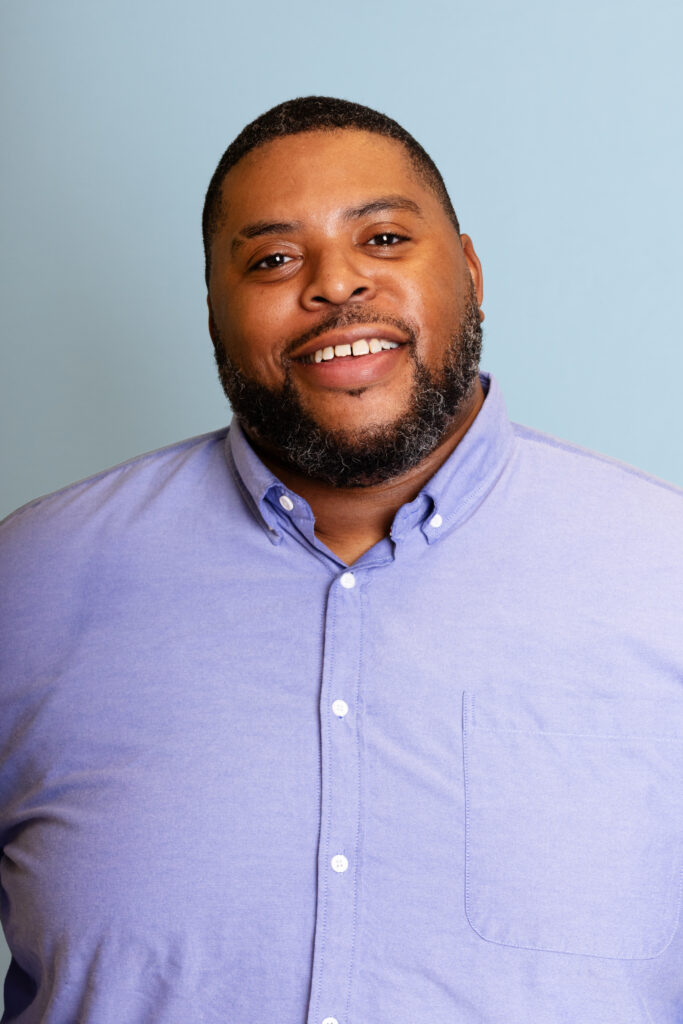
To every man of color holding it together —
I want to tell you something I’ve spent years learning how to say out loud: I have anxiety. Not the kind that’s easy to name at the dinner table. The kind that finds you at 3 a.m. when the house is quiet, and everyone you love is asleep—and somehow that stillness becomes the loudest room you’ve ever been in. The kind that walks into a meeting with you, sits right beside you while you’re speaking, and whispers, ‘Who do you think you are?’ just loud enough that you start to believe it.
I overthink. I self-doubt in ways that don’t match what people see from the outside. The thing nobody talks about is how lonely that is—because from the outside, everything looks fine, and so you learn to let it look that way. You get good at it. You smile in the right places. You lead the meeting. You hold the room. You go home and hold the family. And somewhere in all that holding, you forget to ask who is holding you.
You can be surrounded by people who love you — in a full room, at a full table — and still feel completely, utterly alone with what’s going on inside you. That’s not weakness. That’s what happens when we never learned that we were allowed to need something.
Related: Therapist-Approved Mental Health Tips for Black People Who Need to Keep Going
I know what that isolation looks like from the inside. The performance of okayness. The way you laugh a little too easily to make sure everyone around you feels comfortable. The exhaustion that has nothing to do with sleep. The provider pressure that sits on your chest before your feet even hit the floor in the morning—the quiet, relentless questions: Am I enough? Am I doing enough? Will it be enough? You carry that alone because you were taught that a man who is struggling is a man who is slipping. And to be a Black man in this world means you have to hold that line even more. So you grip tighter. You go quieter. You disappear into plain sight.

I see this same thing, this same wound, in the young men I serve every day. Young men of color navigating homelessness, some of them teenagers, who have been performing strength since before they had any business having to. Survival demanded it of them. The streets taught them that trust is a liability, that stability is a concept that belongs to other people’s lives, that the safest version of yourself is the hardest one. When you’ve had to fight for every resource, every roof, every meal, your nervous system doesn’t just switch off because someone offers you a safe space. The body remembers what the mind is trying to forget. What looks like aggression is often terror. What looks like paranoia is often self-protection earned the hard way. What looks like resistance is often a young man who has been let down so many times that hope itself feels dangerous.
I think about a young man I walked alongside for years. Smart. Thoughtful. The kind of young man who made you lean in when he spoke. He was a young man I had come to know through the men’s group I facilitated. He was present and engaged; he showed up and kept showing up, which in this work means everything. But over time, I watched something shift in him. A change in his demeanor. A dimming. The kind of decompensation that happens when the weight of surviving without a real foundation finally catches up to a person.
I remember the day—clear as anything I’ve ever witnessed in this work—when he walked out of our drop-in center’s shower, completely unclothed, and kept walking. Straight out the door. Onto 125th Street. Right in front of the Apollo.
I ran. Grabbed a blanket and ran after him down that block. And when I reached him and wrapped it around his shoulders, I looked at his face. He was embarrassed—you could see it. That flicker of awareness, of coming back into himself just enough to feel exposed. But there was something else there, too. Relief. He looked at me like he was glad I had come. Like some part of him, underneath everything that had broken loose, still knew that someone was there. Still believed, maybe for just that moment, that he mattered enough for someone to run towards him.
That moment has never left me. Because what I saw on that corner wasn’t just a mental health crisis. It was what happens when a young man has spent so long in survival mode that stability itself becomes unrecognizable. When the inside of a safe building feels more threatening than the street, because at least the street never pretended to be something it wasn’t. When the mind, pushed past its limit with no tools, no support, and no one who ever asks, “What’s going on with you?” just breaks open in the middle of the day on a busy block in Harlem.
That’s what the silence costs. That’s what it costs all of us—when we teach young people of color that pain is something to outrun, not something to name. It doesn’t disappear. It just waits. And eventually, one way or another, it finds a way out.
So this July, during BIPOC mental health month, I’m choosing to say it plainly, publicly, without apology: I am a Black man who struggles with anxiety and self-doubt. I am also a man who shows up every day, who loves his family fiercely, who believes deeply in the young people he serves, and who is learning—slowly, imperfectly— to stop treating his own pain like a secret that needs to be kept.
If something in you just exhaled reading this, I see you. You are not the only one in the room who is carrying something. You never were. You are allowed to share your pain. And I promise you, when you do, the people who love you will run towards you to help.
Sebastien Vante is Associate Vice President of Streetwork Programs at Safe Horizon