
30 Years After Tupac’s Death, a Look at the Events Leading to Keffe D’s Trial
Next month marks the 30th anniversary of rapper Tupac Shakur‘s untimely death. But three decades of conspiracy theories, cold leads, and rumors have now come to a head, as the murder trial for Duane “Keffe D” Davis—the suspect accused of organizing the brazen Las Vegas strip shooting and detailing his involvement in a 2019 tell-all memoir that led investigators to reopen the cold case—officially kicks off on Aug. 10, bringing the late rap legend’s unsolved murder back to the headlines.
Ahead of the trial, we’re taking a look back at the incidents that led to this moment.
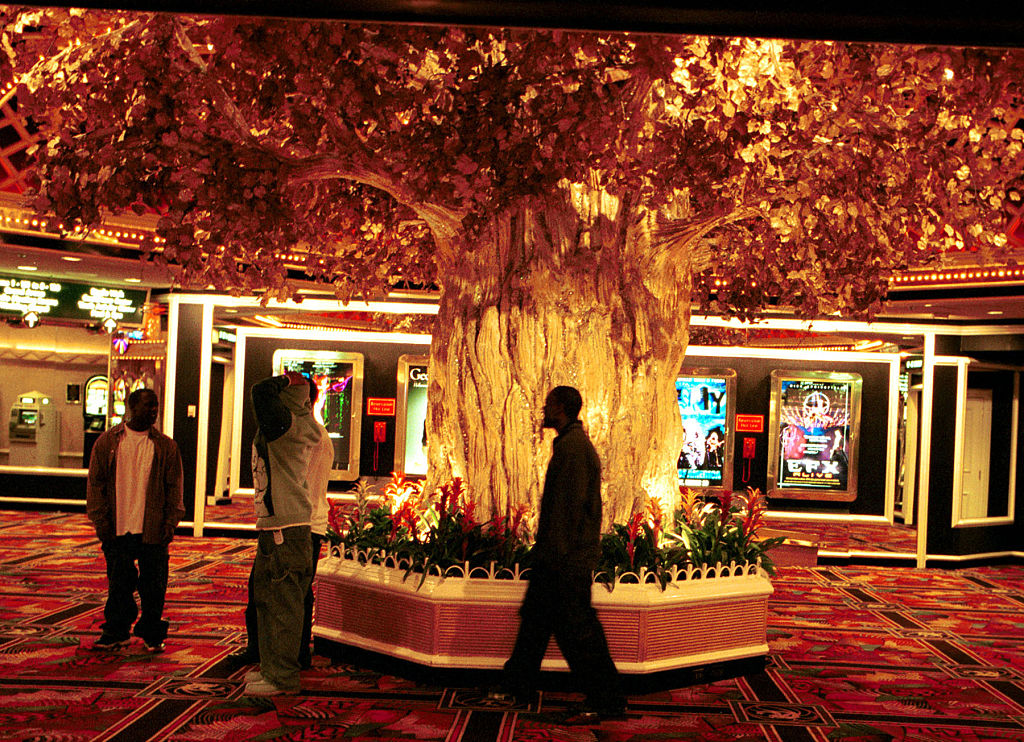
8:30 p.m., Sept. 7, 1996: Inside the MGM Grand lobby
While Mike Tyson and Bruce Seldon fought for the WBA Heavyweight title in Las Vegas, Tupac Shakur and his entourage had their own fight in the MGM Grand lobby. Minutes after Tyson knocked Seldon out in the first round, Shakur, Marion “Suge” Knight, and others fought with a group that included Duane “Keffe D” Davis and his nephew Orlando “Baby Lane” Anderson—a man with whom Shakur had previously clashed, The Hill reported.
Surveillance video showed Shakur and Knight kicking and punching Anderson near a bank of elevators, police said.
Flamingo Road & Las Vegas Blvd.

Around 11:15 p.m., the black BMW in which Shakur was riding as a passenger stopped at a red light at Flamingo Road and Koval Lane, just a block from the Strip. Malcolm Greenidge, a lifelong friend of Shakur who was trailing in a car behind the BMW, told the grand jury that indicted Davis that they were headed to Club 662 when a white Cadillac quietly pulled up alongside.
According to Vulture, Davis, Orlando, Deandre “Freaky” Smith, and Terry “Bubble Up” Brown were inside the Cadillac. Of the four men, only Davis is still alive today.
The Fatal Shooting

According to Davis’s account, his crew was heading toward the Strip when they noticed Shakur leaning out of the passenger window of the BMW, waving at fans. Recognizing the rapper, Davis ordered driver Terrence to make a U-turn because, as Davis put it, they “found who we were seeking.”
Greenidge told the grand jury that “an arm came out of the back window and began shooting,” letting off more than a dozen rounds. The “California Love” rapper was hit four times, twice in the chest. Knight, who was driving the BMW, was grazed in the head by a bullet fragment.
Related: The Evolution of Tupac Shakur
Immediate Aftermath

Knight had a flat tire and couldn’t drive away, leading paramedics to pull them over at Las Vegas Blvd and Harmon Ave. Shakur was placed on life support after he was rushed to the University Medical Center (UMC) around 11 p.m. He was listed in critical condition, underwent emergency surgery to remove his right lung, and remained on a respirator in intensive care.
Six Days Later

On Sept. 13, Tupac Shakur succumbed to internal bleeding and respiratory failure in the ICU and was pronounced dead at 4:03 PM. He was 25.
Decades of Cold Leads & Rumors

In the years following September 1996, the search for Shakur’s killer stalled due to uncooperative witnesses, police missteps and dead-end leads. Neither the Cadillac nor the firearm used in the shooting were ever recovered, according to Clifford Mogg, the retired Las Vegas police detective who was assigned to the investigation in 2018.
Over three decades, key figures passed away, law enforcement faced persistent scrutiny for failing to secure a conviction in one of the most notorious unsolved murders in the United States—until 2019.
Keffe D’s Tell-All and The Reopened Case

The cold case that seemed to have no resolution gained traction after self-incriminating accounts and public confessions reignited the investigation. In 2019, Davis co-wrote “Compton Street Legend” with Yusuf Jah, a memoir in which he admitted he was in the Cadillac and provided the weapon used to shoot Shakur.
“Them jumping on my nephew gave us the ultimate green light to do something,” Davis wrote in his book, per the Associated Press.
Marc DiGiacomo, chief deputy district attorney in Clark County, said, “Had he decided to never write the book, he would not, probably, have ever been prosecuted for the crime,” as reported by KSAT.com. Davis’s defense attorney, Michael Sanft, argued that the book was fictionalized to make money, and that it was unclear which parts, if any, Davis actually wrote.
“The Missing Piece of the Puzzle That Hip-Hop Fans Have Been Waiting For”

“The infamous Suge Knight, former Death Row Records CEO, and I are the only living eyewitnesses to the deadly confrontation on the Las Vegas Strip between the occupants of our two vehicles,” the memoir’s Amazon description read.
Teasing readers that the book would serve as “the missing piece of the puzzle that hip-hop fans have been waiting for,” the blurb detailed “a strict code on the streets. One that real street players live, kill, and die by.” It promised that “Compton Street Legend” would reveal “the street-level code violations and the explosive consequences when the powerful worlds of the streets, entertainment, and corrupt law enforcement collide.”
The War Behind the Music

Authorities branded Davis as a 1990s “shot caller” for the South Side Compton Crips—giving him the exact motive prosecutors say drove him to order the fatal hit after the casino brawl in a dueling war, local news station KSNV 3 reported. On one side stood the bitter, East Coast vs. West Coast feud between Suge Knight’s Death Row Records and Sean “Diddy” Combs’s Bad Boy Records.
According to witnesses, the South Side Compton Crips provided protection for Bad Boy, while Mob Piru was affiliated with Death Row.
“One of My Guys Grabbed the Glock”

“We couldn’t let no record company studio gangsters do us like that,” Davis writes in “Compton Street Legend,” per Vulture. According to the book, Davis saw Shakur reach for a weapon, so “one of my guys from the back seat grabbed the Glock and started bustin’ back.”
The Raid and The Indictment
More than 25 years after Shakur died, SWAT officers executed a late-night search warrant on Davis’s Henderson, Nevada, home, The Guardian reported. Police said they seized hard drives, a cellphone, multiple computers, a Vibe magazine that featured Shakur, two “tubs containing photographs” and several .40-caliber bullets on July 13, 2023, three days before what would’ve been Shakur’s 52nd birthday.
It took a Clark County grand jury two months to indict Davis with one count of open murder with the use of a deadly weapon, with a gang enhancement charge, marking the first formal criminal prosecution in nearly three decades.
The Trial

Davis’s jury trial will begin Aug. 10, nearly three years after he was arrested in 2023, the Associated Press reported. Davis, now 63, pleaded not guilty and has been imprisoned since 2023. If convicted, he faces life in prison.
What’s Next

Due to anticipated high public interest and limited courtroom space, the Las Vegas court will implement a daily lottery system to fairly distribute available seats in the main courtroom after a jury is selected—which is expected to take several days, as reported by KVVU TV.