
Proof Trump’s Plan to Dismantle the Black Middle Class Is Actually Working
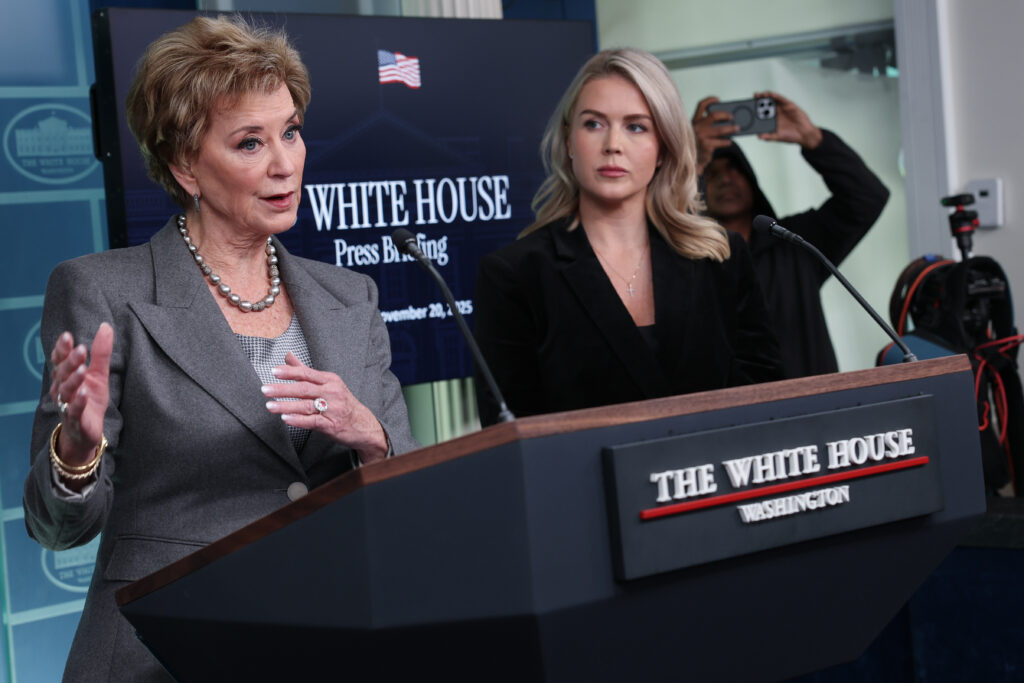
Before President Donald Trump returned to the Oval Office, he promised sweeping policies that would improve life for Black Americans and the greater working class. But more than a year has passed since the start of his second term, and instead, Black people have been hit hard by many of his controversial policies.
Black middle and working class Americans continue to be rocked by attacks on diversity, equity and inclusion, economic stress and political backlash, and it’s time we talk about it. He once claimed to be the best president for Black folks since Abraham Lincoln, but Trump’s recent track record tells a totally different story. Just take a look.
Dismantling the Department of Education

When the president vowed to dismantle the U.S. Department of Education (ED), Black leaders were immediately put on high alert. As we previously told you, the department was created in part to provide equal access to education for all American students regardless of race, gender, or socio-economic status. But under the leadership of Secretary of Education Linda McMahon, a former wrestling executive, the department looks very different for Black kids.
ED’s Impact

From removing federal oversight on civil rights to altering established funding for lower-income schools, Black students are already feeling the impact one year into Trump’s plot. Experts say the dismantling of the ED could exacerbate the school-to-prison pipeline and also disenfranchise lower-income students, the EDU Ledger reported. And this would undoubtedly impact the future of the Black working and middle class, who have been historically underrepresented and underfunded.
Undermining the Voting Rights Act of 1965

In 2025, Trump signed an executive order calling for an end to birthright citizenship, which is part of the 14th Amendment, formally validating enslaved people as United States citizens. For generations, birthright citizenship has been at the center of many civil rights efforts, including the Voting Rights Act of 1965.
Attacks on Birthright Citizenship

The fate of birthright citizenship now sits with the Supreme Court, which will rule in a landmark case against Trump this year. But ahead of the upcoming midterm elections, critics say the president’s attack on the 14th Amendment will open the floodgates for voter suppression tactics to be used against Black Americans.
We’re already seeing Republican-led redistricting efforts aiming to redraw voting zones in favor of the GOP. In states like Virginia, Black voters have even received redistricting propaganda flyers ahead of their Tuesday (April 21) vote on the matter.
Trump’s Tariffs

Trump defended his 2025 wave of tariffs saying the international taxes on dozens of countries– including our allies– would result in more jobs and international accountability. Instead, Black Americans carried the weight of the policy until the Supreme Court struck down Trump’s policy back in February, we reported.
Economic Impact on Black Families

Americans nationwide felt the weight of these tariffs, but Black households spend a disproportionate amount of their income on consumer goods, which were hit hardest, according to a 2025 Nielsen report. Critics accused the president of having a “choke” on the middle class, which ultimately drove up prices on international goods– particularly those from China and Mexico– and forced Black families to make tough decisions.
SNAP Benefits Paused

Months after Trump enacted his tariff policy, Congress failed to agree on the federal budget. In turn, the country endured the longest government shutdown in history. The occurrence meant funding for SNAP benefits and other crucial government programs was halted.
Eighteen million households reported being food insecure in 2023, according to data from the Department of Agriculture. Black households experience food insecurity at more than twice the rate of white households. And without SNAP, even temporarily, Black households were greatly impacted.
Sending in National Guard to Police Black Cities

We previously told you all about Trump sending in the National Guard to several American cities around the country. Notably, many of these cities like Washington, D.C. and Los Angeles– which both have sizable Black populations– were the first on Trump’s list.
Impact on Black Communities
The president deemed these cities “too far gone,” perpetuating racially-charged stereotypes that Black cities– especially those led by Black mayors– are uncontrolled and infested with crime. The effects were evident. Videos of Black men and youth being detained, randomly patrolled and even questioned by Guard officers flooded the internet. But according to local leadership, the data tells a different story.
Several Black politicians, like D.C. Mayor Muriel Bowser and Baltimore Mayor Brandon Scott, called out Trump for targeting Black folks.
“I think it’s very notable that each and every one of the cities called out by the President has a Black mayor,” Scott said. “Most of those cities are seeing historic lows in violent crime.”
300,000 Unemployed Black Women

Last year, over 300,000 Black women reportedly lost their jobs or left the workforce, largely driven by Trump’s policies. We kept you up to speed with the waves of federal job cuts under the Department of Government Efficiency. And while Trump and Tesla CEO Elon Musk argued these mass firings were imperative for ensuring a more productive government, it’s the Black middle and working class who suffered the most.
Black Law Workforce Hits Decade Low

A March report from the National Association for Law Placement shows that the number of law associates of color has declined 12.9 percent compared to 2025, as we told you. Specifically, law firms reported a “record high” of POC lawyers in 2024, although it still fell short at around 43 percent. That number has dropped to 37 percent in 2025.
Impact on Black Workforce, the Greater Economy

Black folks disproportionately make up the federal workforce, so when thousands of employees were fired, experts also raised alarms about the potential impact on the U.S. economy. The Black unemployment rate has now reached 7.1 percent in March 2026, according to ABC 11 News. That’s compared to the national unemployment rate of 4.3 percent and the white unemployment rate, which is 3.6 percent.
“The Black unemployment rate is always the first to go up. That’s always the canary in the coal mine,” Gbenga Ajilore, chief economist at the nonpartisan Center on Budget and Policy Priorities, previously told USA Today. As he explained, Black Americans are often the first to be hit by economic downturns like recessions.
Banning DEI

Perhaps the first sign of Trump’s attacks against the Black middle and working class came on the first day of his second term. That’s when he signed an executive order to ban DEI at the federal level. Although the modern version of DEI took form around 2021, Trump’s decision to axe diversity rolled back decades of progress for Black Americans, namely several anti-discrimination policies that protected Black folks in the workforce.
America Without DEI

The end of DEI led to thousands of jobs– which included “diversity” in the descriptions or titles– being eliminated nationwide, NPR reported. And as we stated earlier, this dip in the national workforce had dangerous consequences for the economy.
When you look closer at the impact on Black communities, the economic and professional pressure as a result of anti-DEI policies continues to put Black working-class people at a disadvantage. Eliminating DEI has led to pathways for employment and growing wealth harder, according to The Center for American Progress.
Trump vs. Black Political Leadership

Trump’s long list of political enemies notably includes mainly Black politicians, like N.Y. Attorney General Letitia James, Texas Rep. Jasmine Crockett and former President Barack Obama, we previously told you. But while his revenge plot may seem self serving, Black voters should be on high alert. As Trump continues to target Black elected officials, American voters are inherently disenfranchised.