
OPINION: Invest In The Women Who Feed Africa
I grew up in Sierra Leone during a time of war and hunger. Food was not something we took for granted. Instead, it came to us with questions. Would there be enough? Where would it come from? Who would find it? And the answer, almost always, was the same: a woman. My mother. My aunts. The women of our Fulani community, moving through scarcity with a knowledge so deep and practiced it looked, from the outside, like something close to magic as we celebrate World Food Day on October 16.
I have been a chef for most of my adult life. But the longer I cook, the more clearly I see that what I do is deeply rooted in what those women did. Every dish I serve carries the wisdom of generations. The understanding of which grain survives a drought, which leaf heals, which preparation turns something simple into something nourishing: all of it came first from them.
This year, the world is celebrating women farmers. The International Year of the Woman Farmer 2026 is a long-overdue recognition of the women whose work and knowledge sustain our agrifood systems. It is also a mirror held up to all of us: governments, institutions, chefs, and consumers.
In Africa, we say women are the backbone of agriculture, and the numbers bear this out. In sub-Saharan Africa, 76% of women’s employment is in agrifood systems, compared with 68% of men’s. And yet, after carrying so much for so long, these women are still asked to overcome obstacles no one should have to face. Too many still face unequal access to land, finance and the agricultural support services that could allow them to grow more.
RELATED: Our Ancestor’s Influence: Africa’s Amazing Impact on the World
The system that benefits from their labor has been slow to return what it owes. This year, the Food and Agriculture Organization of the United Nations (FAO) estimated that closing the gender gaps in farm productivity and wages across sub-Saharan Africa could add $53 billion to the region’s economy and reduce food insecurity by nearly 4%. Simply put, women are foundational to Africa’s food systems and food culture.
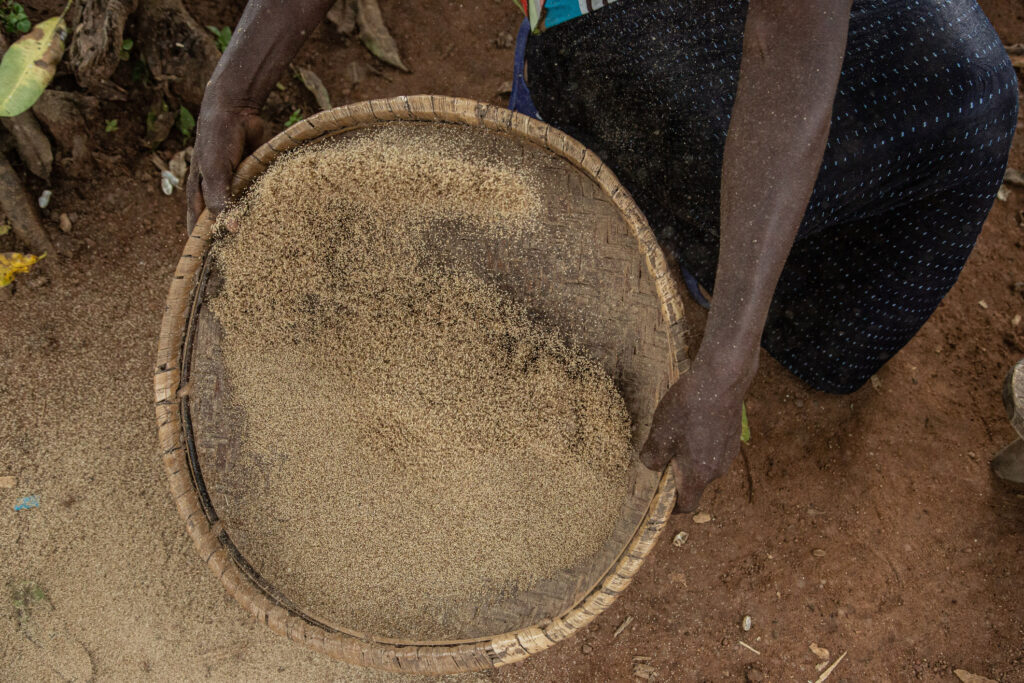
One of the crops closest to my heart is fonio. It is among the oldest cultivated grains in West Africa: small, resilient, nutritious, and capable of growing in poor soils under harsh conditions that would defeat most other crops. It has traditionally been cultivated and processed by women, and the most labor-intensive work, such as dehusking and winnowing, remains almost entirely in their hands. Through the Fulani Kitchen Foundation, we work with Ghana’s Ministry of Food and Agriculture and with women who grow fonio, helping them process it more easily, find markets, and earn more from the knowledge they already have.

My nomadic restaurant, Dine On A Mat, was born from the same conviction. When guests come to eat with me, they sit on mats, drawing on the Fulani tradition of sharing food. There are no hierarchies on the mat. There is food, and there are stories, and there is the unfolding understanding that what you are tasting has roots that go far deeper than any kitchen.
The dish in front of you carries generations of knowledge passed down by women, but it is not frozen in time. That knowledge has always evolved, adapting to changing landscapes and lives, and it continues to offer lessons for how we might grow, cook, and eat in the future.
The women who have managed these lands across generations, who developed climate-resilient practices long before that phrase entered any policy document, are among our most important assets. Fonio has been with our communities for generations, and it can help carry us into the future. It grows where other crops struggle and helps families withstand difficult seasons. The women who have kept this grain alive have knowledge we will need more than ever.
I am also thinking about young women. Africa has the world’s youngest population, and in that youth lies an extraordinary opportunity, but only if we make agriculture worth choosing. Too many young women see farming as a path closed to them, whether by lack of land, by the absence of digital tools and education, or by the sense that the future lies elsewhere. We must change that. A young woman’s knowledge of her grandmother’s seeds and her fluency with a smartphone are not contradictions. They are exactly the combination that 21st-century agrifood systems need.

As FAO Regional Goodwill Ambassador for Africa, I have the privilege of bringing these stories into broader conversations about food and agriculture. The International Year of the Woman Farmer 2026 offers a timely opportunity to recognize and celebrate the essential contributions of women farmers. In honor of World Food Day on October 16, let us honor African women farmers and the knowledge, resilience and care they bring to our food systems, communities and shared future.
For my part, I will keep doing what I believe chefs must do: make the invisible visible. Name the women farmers behind the ingredients. Tell the stories that go with the dishes. Refuse to let the culinary heritage of Africa be admired without acknowledgement of the women who created it, nurtured it and kept it alive.
I grew up in a place where hunger was real and women were the answer. Nothing I have learned since has changed that. Women farmers have carried our communities through hard seasons for generations. They have protected seeds, fed families and passed knowledge from one generation to the next. We should give that work the respect it deserves, and make sure the women doing it have what they need to keep going.