
How Ray Charles Outsmarted the Industry and Became Ultra Rich
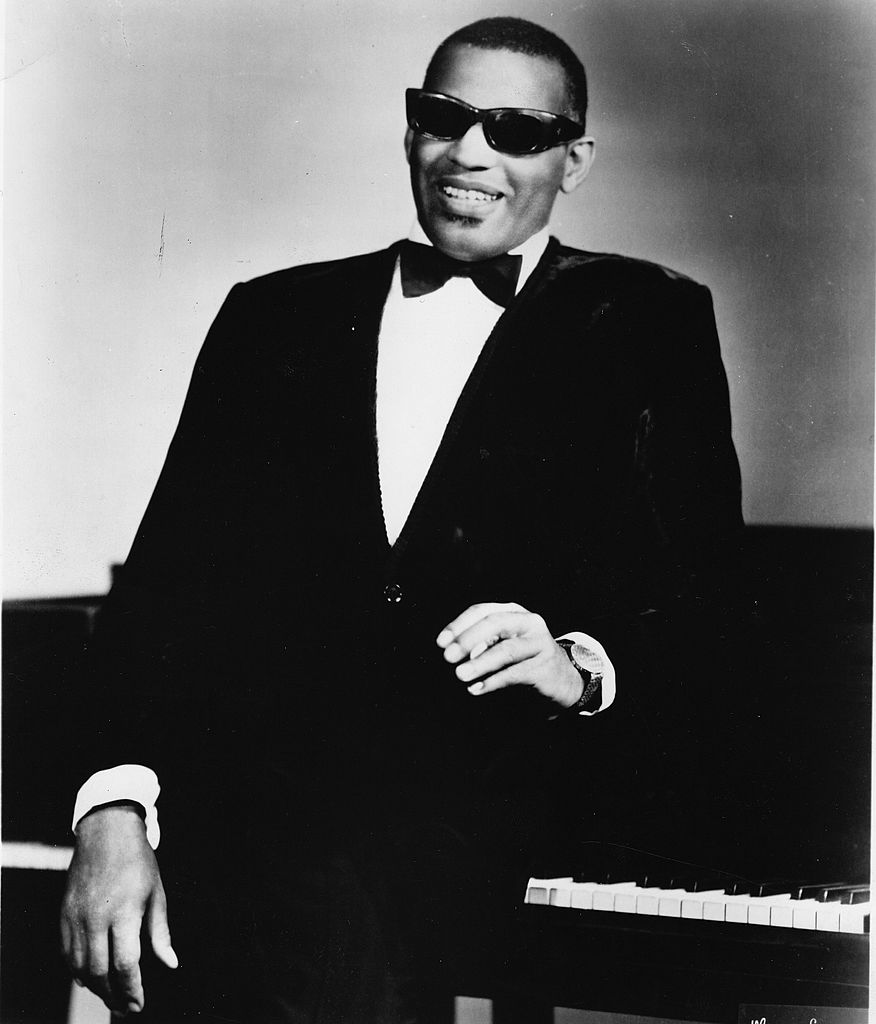
This year marks the 40th anniversary of Ray Charles’ induction into the Rock & Roll Hall of Fame. The musical legend, who was inducted in 1986 as part of the inaugural class alongside iconic musicians like Sam Cooke, James Brown and Jerry Lee Lewis, was not only a musical pioneer but a business genius too.
While the artist’s image today is almost solely that of a man who overcame blindness to become one of the greatest entertainers, not many realize he had gangsta-like business strategies that helped retain his rights and build his riches. If crime boss Bumpy Johnson was the Godfather of Harlem, Ray Charles was the “Godfather of the Master Recording.” We’ll tell you how.
Raised To Be Tough

Born on Sept. 23, 1930, in Albany, Georgia, in the Jim Crow South, Ray Charles was never going to have an easy life. By age 5, he had already dealt with the passing of his younger brother, and he lost his sight completely by age 7. Despite the harsh conditions around him, Charles’ mother raised him to be tough and not a victim of his environment or disabilities. This laid the foundation for the artist and businessman he would become.
In an interview with Investor’s Business Daily, famous music journalist Michael Lydon said Charles’ mother, Aretha Robinson, made sure he was raised like any other kid.
“She would not let him become an invalid or a cripple. He would still have to get water from the well. He would still have to clean his room. He would still have to do chores. She taught him to be tough and said to him, ‘If you don’t want to sell pencils on the corner, you are going to have to be tough,’” he said.
Pursuing Music

Charles’ mother enrolled him in the Florida School for the Deaf and the Blind in St. Augustine. During his time there, he learned how to read and write music. In 1945, at age 15, Charles was certain he wanted to be a musician and dropped out of school soon after his mother’s passing to build his career.
However, pursuing his dream didn’t go as smoothly as Charles imagined. In 1947, when iconic bandleader Lucky Millinder came to Florida to hold auditions, the young musician showed Millinder what he could do and received his first rejection.
“I give it all I got. And when I’m through, I just sit there, waiting for the verdict. Lucky is straight with me; he doesn’t mince words: ‘Ain’t good enough, kid,’” Charles said in his 2003 book, “Brother Ray: Ray Charles’ Own Story.” “For a self-assured little motherfucker like me, that was a very heavy blow.”
Hustling Even Harder

After receiving his first rejection, Charles understood he needed to get out of the confines of his small Florida town to build up his name as a musician elsewhere. In 1948, Charles took the $600 he had in savings and moved to Seattle.
According to the music publication History of Rock, Charles formed the band the McSon Trio in Seattle, which was inspired by the musical stylings of jazz artists Nat King Cole and Charles Brown. Together, the group made the R&B hit “Confession Blues” in 1949 on the Swing Time Records label, securing Ray Charles’ first taste of success.
Building His Solo Image

In 1950, Charles moved to Los Angeles and officially signed with Swing Time Records. However, he only spent two years with the label; as the company was closing down, Charles’ recording contract was snapped up by Atlantic Records for $2,500, per History of Rock.
This worked in Charles’ favor, as he went on to release the song “I Got a Woman” under Atlantic Records in 1954, taking his growing fame to new heights. Then, in 1957, the musician released his self-titled debut album, “Ray Charles.”
Business Partner In Crime

By 1959, Charles had a solid decade of hustling under his belt, but he still needed a business partner to help him manage his image. That is when the “man behind the man,” Joe Adams, came in.
Adams was already very successful and well known in the entertainment industry. Per the official Ray Charles site, Adams was the first African American to win a Golden Globe for “New Star of the Year” and had a successful radio and Broadway career. To put it simply, he knew the ins and outs of the entertainment business and was exactly who Charles wanted by his side.
In 1959, Charles invited Adams on tour and asked the retired entertainer to be his manager. Adams agreed, and together the pair went on to build an empire in the music realm.
Making Moves No Other Musician Did

Later that year, Charles made a business move that was unheard of for musicians at the time. With Adams by his side, Charles signed with record label ABC-Paramount under one condition: He made it clear that he wanted to own the rights to his masters, and he got what he wanted. Not even the iconic Frank Sinatra owned his masters at the time. This was a major move not only for a Black man in that era, but for all musicians in general.
To keep control of his name, image and music, Charles went on to create Ray Charles Enterprises in 1960. He named Adams vice president in 1962, a position Adams kept until Charles died in 2004.
Founding His Own Record Labels

Also in 1962, Charles founded his record labels Tangerine and Racer Music Corp. According to the soul publication WBSS Media, his labels were promoted and distributed by ABC-Paramount. This was just another business win for Charles.
But Charles didn’t start a label just to distribute his own music. Per the Ray Charles site, he signed numerous artists, such as Billy Preston and Louis Jordan, to Tangerine, helping launch the careers of multiple great musicians.
Widening His Fanbase

Charles and Adams knew that talent could only get them so far in the music game. What they needed was to secure a wider fan demographic for Charles, and in 1962, they were willing to take the risks to do it.
In a 2010 interview with Reuters, Tony Gumina, the late president of the Ray Charles Marketing Group, said Charles began marketing himself to white audiences by shifting his soulful sound toward country music.
“He was trying to sell records to people who didn’t want to drink from the same water fountain as him. But this was one of his greatest creative and business moves: to not be categorized musically and cross over,” he said.
At the same time, Adams worked on everything regarding Charles’ public image by taking control of his wardrobe, show productions and even his lighting, per Reuters.
Building A Recording Studio

Robinson, 1930 – 2004) plays piano as he performs during a JVC Jazz Festival concert at Avery Fisher Hall at Lincoln Center, New York, New York, June 29, 1994. (Photo by Jack Vartoogian/Getty Images)
By 1964, Charles had built his own recording studio, RPM (Recording, Publishing and Management) International, in Los Angeles. According to Reuters, ABC-Paramount would rent out the studio from Charles. Therefore, the artist would be making money before he had even released his music. If there was profit to be made, be sure Ray Charles was making the most of it.
Riding In Style

Not only did Charles have control over his masters and build an enterprise and a recording studio, but he also had a private plane for himself and his band. According to his site, the musician was the first artist to buy a plane for his entire band to join him on tours around the world.
Not only did the musician own a plane, but he also knew how to fly them. Per the Smithsonian, Charles’ pilot, Tom McGarrity, a Black Air Force veteran, taught Charles everything he knew and would let him pilot the aircraft. The musician would listen to the beams of the jet’s radar, which he used to guide him.
Setting Up A Foundation For Deaf Children

In 1986, Charles used his success to build the Robinson Foundation for Hearing Disorders Inc., which was renamed the Ray Charles Foundation in 2006. Though Charles never saw his blindness as a disability, he did feel that the inability to hear was a “handicap,” according to the Ray Charles Foundation website.
Through his foundation, he funded cochlear implant operations for those in disadvantaged communities and supported students who could not afford to attend school.
Ruling With An Iron Fist

In 2002, two years before his death, Charles sat his 12 children down and revealed that he had given them each $500,000 in his will and nothing more. He told them that the rest of his riches would go toward the foundation he had built, according to Billboard. It was a move that showed Charles was serious about both his money and his legacy, as he did not give his family access to the business he had built from the ground up.
His Legacy

Nowadays, Charles is remembered for the way he overcame blindness to become one of the greatest musicians ever known. But the truth is, his disability was not his main fight. He fought to have control over his sound, his image and his business at a time when doing so was extraordinary for any musician, but especially for a Black man. He was not only a musical genius, but a business gangsta too.