
Black TikTok Creator Speaks Out After White Influencer Accused of Copying Her Video Word for Word
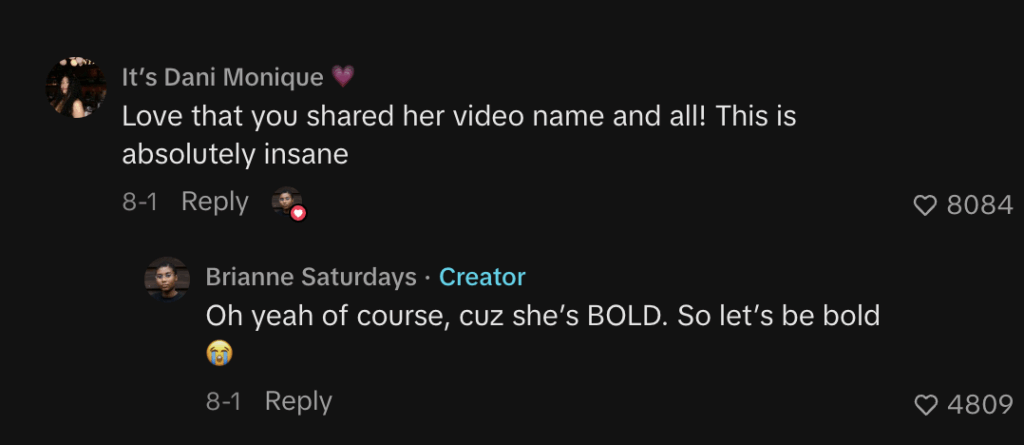
“My content was stolen, let’s roll the clips.” With those eight words, Black ADHD content creator Brianne Saturdays set off a viral storm earlier this month when she called out a white influencer who appeared to remake one of her videos word for word—with receipts in tow.
Brianne Saturdays spoke to The Root to address the incident, after she showed a side-by-side comparison of fellow ADHD content creator Laurie Faulkner, who is white, seemingly reciting Saturdays’ explanation of why women with ADHD tend to over explain. The similarities extend beyond the message itself as Faulkner appears to follow Saturdays’ exact wording, delivery, and even her cadence.
“My first feelings were sadness that this hard work that I do after a long day of being a nurse and mothering my two children was just taken away from me,” Saturdays told The Root. Along with that sadness came fear.
Saturdays worried that publicly defending her work could somehow backfire, leaving her to face the consequences while the person accused of copying her continued without repercussions. “The biggest feeling of all was that I would have another life occurrence of something unfair happening to me, and I would still get the sh*t end of the stick,” Saturdays continued.
For Saturdays, seeing another creator allegedly plagiarize her work was more than just another instance of content recycling without credit. It resurfaced a familiar, lingering feeling of having to decide whether defending herself would cost her more than keeping quiet.
“I am a very quiet, to myself, woman. After a life of being parentified and being the eldest daughter [and] second mom to my single mom, I was always fighting off chaos—whether it be protecting my siblings, standing up for myself in places like school, church, [and] places where authority just always felt that they could get away with the mistreatment of me or the younger versions of me that I looked after,” she told The Root.
That constant responsibility followed Saturdays into adulthood. However, learning that she was neurodivergent—a non-medical term that describes people whose brains process information differently than what society considers typical—eventually allowed her to better understand herself and make protecting her peace a priority. Now, she’s lives in her “truest form of a neurodivergent, Black woman.”
Protecting that peace, however, becomes harder online where Black innovation is routinely exploited. Their ideas can help shape online conversations, only for more popular or privileged creators to reproduce the work and receive the recognition. And when Black creators tend to speak up, they risk being portrayed as the problem for demanding credit in the first place.
Related: Black People Built TikTok, So Why Do We Have the Most to Lose From An Impending TikTok Ban
This time, Saturdays decided that staying silent would mean abandoning herself. “I then remembered that entire life that I spent sticking up for other people was always for other people,” she shared. “This was an opportunity to stick up for me, so I ran with it.”
That decision resulted in an outpouring of support, her original post taking off, and new followers rallying behind her on TikTok and Instagram.


“The response was absolutely healing and incredible! I went from 10k on a Friday night to 80k less than a week later. That was just on TikTok – on Instagram I went from 1k to now sitting at 40k in less than a week,” she said.
For Saturdays, the most meaningful part was not simply watching her follower count grow; it was seeing Black women recognize what had happened and show up for her in the same way she had spent much of her life showing up for everyone else. Saturdays told The Root: “It all came full circle and I have no regrets about posting the video.”
As of this writing, Laurie Faulkner has not addressed the accusation nor issued a public apology. Her TikTok comments have also been disabled.