Black People Who Transformed The Fight Against Breast Cancer
Every October, Breast Cancer Awareness Month reminds us that behind every statistic is a story, and behind every breakthrough, someone who dared to push the conversation forward. Black pioneers have helped transform breast cancer research, challenge disparities in treatment and make space for the voices too often left out of the narrative.
From groundbreaking scientists like Dr. Jane Cooke Wright and Dr. May Edward Chinn to fearless advocates like Audre Lorde and Richard Roundtree, their impact reaches far beyond the clinic. This month, we’re honoring the Black trailblazers who changed how we understand, treat and talk about breast cancer and whose work continues to shape the future of care.
Dr. Jane Cooke Wright (1919–2013)

In the 1940s and ’50s, Wright helped turn chemotherapy from a last resort into a promising treatment. This pioneering oncologist tested anticancer drugs in patients, helping establish the clinical research methods that transformed cancer care.
Dr. Lori Pierce
A radiation oncologist trained in biomedical engineering, Pierce has spent decades refining breast cancer radiation treatment. During her 2020-2021 presidency of the American Society of Clinical Oncology (ASCO), she spotlighted equitable cancer care and greater minority participation in clinical trials.
Dr. Jewel Plummer Cobb (1924–2017)

Working in cell biology from the 1950s onward, Cobb studied melanin, cell growth, and cancer treatments, according to the Marine Biological Laboratory. She later became a pioneering university president, using her platform to open doors for women and students of color in science.
Ricki Fairley

A marketing executive turned advocate after her triple-negative diagnosis, Fairley co-founded TOUCH, the Black Breast Cancer Alliance. Since the 2020s, she has pushed for better access to clinical trials, more relevant research and care designed with Black patients in mind.
Karen Eubanks Jackson
After her breast cancer diagnosis in the early 1990s, Jackson founded Sisters Network® Inc. in 1994. Her survivor-led movement brought culturally relevant education, practical support and frank conversations about breast cancer to Black communities nationwide.
Richard Roundtree (1942–2023)

Diagnosed with breast cancer in 1993, the “Shaft” actor spoke publicly about a disease rarely discussed among men. His visibility helped challenge gendered assumptions about breast cancer and reminded men that symptoms deserve medical attention.
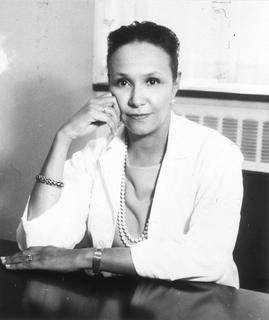
Dr. May Edward Chinn (1896–1980)

Practicing in New York from the 1920s onward, Chinn became one of the first Black women physicians in the city. Focusing on oncology, she encouraged early cancer detection and cared for patients shut out of segregated medical institutions, long before screening became routine.
Marissa Thomas and Jasmine Souers
Diagnosed at 35 and 26, Thomas and Souers launched For the Breast of Us in 2019. Their digital community makes space for women of color to share experiences, find relevant resources and see themselves reflected in breast cancer conversations.
Dr. Edith P. Mitchell (1948–2024)

A medical oncologist, civil rights activist, educator and retired Air National Guard brigadier general, Mitchell made research access a priority. She helped recruit more Black participants into the TMIST breast screening trial, tackling a longstanding representation gap. Mitchell died in 2024.
Dr. Lucile Adams-Campbell

A trailblazing epidemiologist, Adams-Campbell helped launch the Black Women’s Health Study in 1995. By tracking tens of thousands of participants over time, this landmark research has helped scientists investigate breast cancer risks and racial health disparities.
Dr. Lisa Newman
A breast surgical oncologist, Newman has spent decades studying breast cancer biology and racial disparities. Her research into triple-negative breast cancer, which disproportionately affects Black women, helps inform more precise approaches to understanding risk and improving treatment.
Audre Lorde (1934–1992)

In “The Cancer Journals,” the Black lesbian poet and activist challenged the pressure to hide mastectomy scars and painful emotions. Her writing reshaped conversations about illness, race, sexuality, body image and what it means to survive.
Dr. Olufunmilayo Olopade

A Nigerian-born oncologist, Olopade opened a cancer genetics lab at the University of Chicago in 1991. Her research into inherited risk and aggressive breast cancer subtypes has helped advance individualized prevention and treatment, including for women of African ancestry.