15 Black Radio Icons Who Shaped Culture Through the Years
For generations, Black broadcasters used the airwaves to introduce new artists, challenge the status quo, build community and cultivate some of the most iconic voices in American media. Before podcasts and social media, Black radio was where culture lived and thrived. From breaking racial barriers to fighting for the blues, our disc jockeys made history.
Whether folks witnessed history when they tuned into the first and only “The All-Negro Hour” on Chicago’s WSBC in 1929 or caught the late Whitney Houston cursing Wendy Williams out on WBLS in 2003, radio was the place to be. In the spirit of National Radio Day, we’re highlighting 15 of the most impactful Black radio personalities to ever do it.
Jack L. Cooper — The First Black Radio DJ
Starting with our pioneers, former vaudeville performer Jack L. Cooper made broadcasting history in Chicago. In 1929, he launched “The All-Negro Hour” on WSBC and became the first African American radio DJ, laying the groundwork for Black programming on commercial radio. Cooper was later inducted into the National Radio Hall of Fame in 2012.
Hal Jackson — Breaking Radio’s Color Barrier
Hal Jackson was a pioneering broadcaster who helped open doors for Black talent in mainstream radio. He hosted sports programming, “The Bronze Review” and later became a major force behind New York’s WBLS, helping shape the future of Black-format radio.
Nat D. Williams — Fighting for the Blues
In 1948, Nat D. Williams became the first Black disc jockey at Memphis’ WDIA. Known for his animated on-air style—and infectious laugh—he helped establish the station’s “Black appeal” format. He used his platform to champion blues and Black music, influencing the urban radio format we enjoy today. Beyond radio, Williams was also a teacher and a writer at Memphis World in 1931.
Frankie Crocker — The Chief Rocker

Frankie Crocker became one of the defining voices of New York radio, particularly during his years at WBLS. Known as “The Chief Rocker,” he helped turn the station into a dominant Black-format outlet and became known for his larger-than-life personality and musical ear.
Melvin Lindsey — The Quiet Storm
Remembering Melvin Lindsey today on his birthday, the voice that gave us The Quiet Storm and changed radio forever.
His legacy still speaks softly through the airwaves every night. Rest well, Melvin.
#QuietStorm #MelvinLindsey #WHURLegend pic.twitter.com/LwH0rlH0vE
— whur.com (@WHURfm) July 8, 2025

In 1976, Washington, D.C.’s WHUR debuted “The Quiet Storm,” a late-night R&B format created by Melvin Lindsey. The intimate, slow-tempo programming became so popular that stations across the country adopted their own versions, making “Quiet Storm” a lasting radio format carried on by Vaughn Harper and Champagne Palumbo on New York’s WBLS and elsewhere.
Mr. Magic — Putting Hip-Hop on the Radio

Remember when Biggie said: “Hangin’ pictures on my wall / Every Saturday, Rap Attack, Mr. Magic, Marley Marl!” Just know—the show was a big deal.
John “Mr. Magic” Rivas hosted “Rap Attack,” first on WHBI and later at WBLS, helping take hip-hop from New York’s emerging street culture to a dedicated radio audience. Alongside Marley Marl and Fly Ty, he helped make “Rap Attack” one of the first all-rap radio shows to reach a mainstream audience—a cultural impact Biggie would later immortalize in his hit track “Juicy.”
Tom Joyner — The Fly Jock

Tom Joyner—known as “The Hardest Working Man in Radio”—became famous for flying between Chicago and Dallas to host radio shows in the same day, earning his “Fly Jock” nickname. He later launched the nationally syndicated “Tom Joyner Morning Show,” blending entertainment, news, politics and community issues for a predominantly Black audience.
Donnie Simpson — The Urban Radio Legend
Donnie Simpson became one of the most recognizable voices in Black radio during his decades-long career in Washington, D.C. His smooth delivery and influence helped define urban contemporary radio during its rise as a major force in American music and broadcasting.
DJ Kay Slay — “The Drama King”
Known as “The Drama King,” the late DJ Kay Slay became a legendary voice in New York hip-hop radio through his long-running show on Hot 97. A former graffiti artist and mixtape DJ, Kay Slay brought his street-level credibility to the airwaves, using his platform to showcase emerging rappers, break records and host some of hip-hop’s most memorable freestyles and battles.
Wendy Williams — The Queen of Radio Gossip
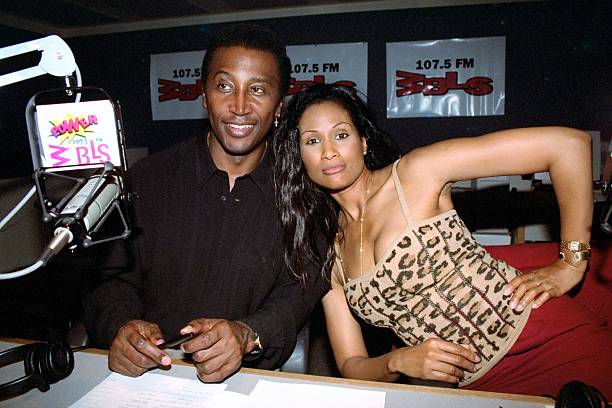
Wendy Williams built a massive following on New York radio, first at Hot 97 and later at 107.5 WBLS, where she conducted some of the most controversial interviews in hip-hop and R&B. Infamous for her cutthroat energy in the early 2000s, the host unapologetically tussled with the likes of the late Whitney Houston, Mariah Carey, Lil Kim, J.Lo and more. While her interviews didn’t always end in chaos, she certainly kept listeners entertained by any means necessary.
Charlamagne tha God — Influential in Contemporary Radio
Charlamagne tha God got his start working alongside Wendy Williams at Philadelphia’s Power 99. He later moved to New York and became a co-host of “The Breakfast Club” in 2010 alongside DJ Envy and Angela Yee—now Jess Hilarious and Loren LoRosa— turning the show into a cultural force known for its candid interviews, occasional political takes and viral conversations.
DJ Clue — The Mixtape King

If you’re an underground rap junkie, you probably still hear DJ Clue‘s voice echoing in your ears. Clue became one of hip-hop’s most influential DJs through his legendary mixtapes, helping artists break records before they reached mainstream radio. He later brought that power to New York’s Hot 97, where “The DJ Clue Show” became a major platform for hip-hop’s biggest names and newest sounds.
Funkmaster Flex — Dropping Bombs in Hip Hop

Funkmaster Flex became one of the defining voices of New York hip-hop radio during his long-running tenure at Hot 97, where his show became a destination for breaking records, freestyles and exclusive interviews. Known for dropping bombs—and endlessly restarting hits on his turntables—his influence extended beyond the airwaves, making him one of the most recognizable DJs in hip-hop, period.
Big Boy — The Voice of West Coast Radio

Los Angeles radio personality Big Boy became a fixture of West Coast radio through his energetic personality and celebrity interviews. His decades-long career helped establish him as one of the most recognizable voices in contemporary hip-hop and urban radio.
Steve Harvey — From Comedy to Syndication

Steve Harvey transformed his comedic persona into a major radio franchise with “The Steve Harvey Morning Show,” which launched on Chicago’s WGCI-FM in 2000 before expanding into national syndication through Radio One. The program combined comedy, celebrity interviews, relationships, current events and cultural commentary, making Harvey one of the biggest personalities in modern Black radio.