
10 Cities Where Black Americans Are Building Economic Wealth like ‘Black Wall Street’
In American cities large and small, Black folks are building businesses, buying homes, breaking into high-growth industries and reclaiming economic ground long denied through generations of exclusion. This subtle but meaningful shift comes decades after Black hubs like Tulsa’s Greenwood District– once known to the world as Black Wall Street– were destroyed in racial retaliation. Now, however, it seems Black Americans are on the cusp of revising history in the form of new Black Wall Streets across the country, and we need to talk about it.
From tech corridors to legacy Southern hubs, from federal job centers to rapidly expanding suburban counties, Black Americans are forging communities where Black wealth and excellence continue to grow.
It’s been nearly 105 years since Tulsa’s Greenwood District burned to the ground. But while it now stands as both a memorial and a symbol of economic revival, in 2026, several Black cities like Atlanta have forged a reputation for carrying on Tulsa’s legacy. That’s why The Root is examining 10 of the top cities where a new generation of Black professionals, entrepreneurs and families are anchoring themselves. Just take a scroll!
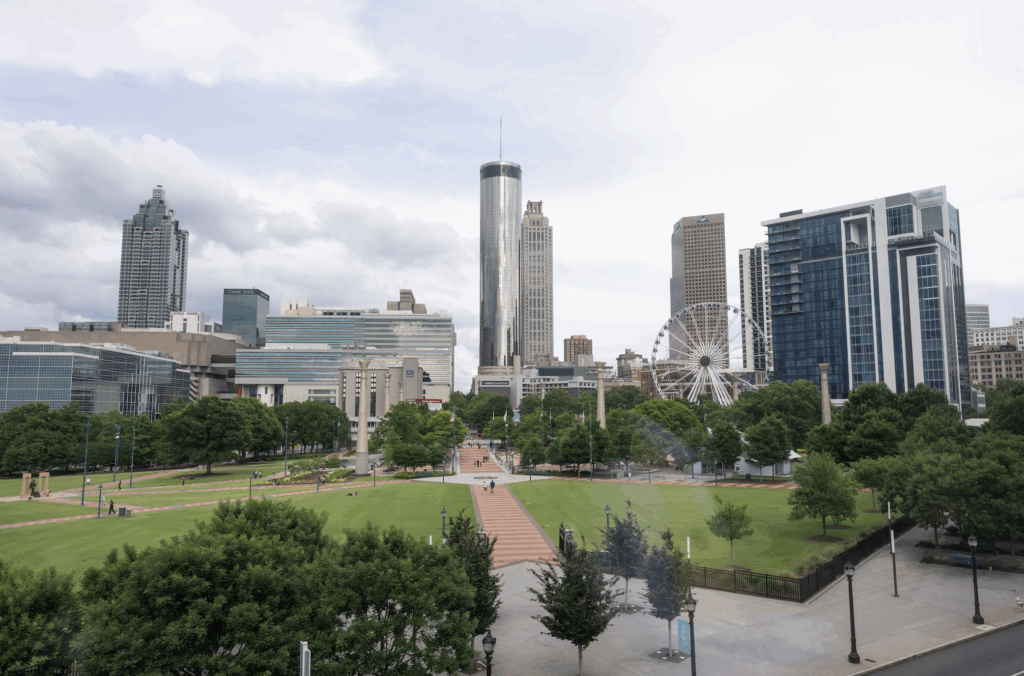
Atlanta, Georgia

For many Black Americans, Atlanta continues to stand out as both a cultural center for Black excellence and an economic engine of Black life in America. The metro area is home to one of the nation’s largest Black middle and upper-middle classes, along with a strong network of Black-owned businesses, political leadership and growing opportunities in industries ranging from media and technology to logistics, film and corporate America, we previously told you. Atlanta hasn’t had a non-Black mayor since the 1970s, and historic ties to the Civil Rights Movement and Sweet Auburn Avenue keep the heart of the city beating with the accomplishments and sacrifices of Black Americans.
Atlanta also ranks high among the country’s leading metropolitan areas for Black homeownership, the Atlanta Journal-Constitution reported. Anchored by historically Black colleges such as Morehouse College and Spelman College, the city has long served as a pipeline for Black leadership, entrepreneurship and academic achievement.
Charlotte, North Carolina

Although Charlotte has always been a hub for Black folks, now the city has emerged as a fast-growing destination for Black professionals, particularly in banking, energy, healthcare and technology, Capital Analytics Associates reported.
The city offers a strong balance of affordability, career growth, public safety and Black political representation. And during a time where inflation and tariffs remain top concerns within Black communities, Charlotte offers some hope. With a growing Black middle class and an expanding corporate world, Charlotte is becoming increasingly attractive for Black families and young professionals seeking both economic mobility and quality of life.
Washington, DC

Washington, D.C. is often ranked the strongest overall metro area for Black professionals and middle-class wealth, according to the Black Wall Street Times. Historically known as “Chocolate City,” D.C. combines high Black median incomes, strong federal and professional job sectors, high educational attainment, and one of the nation’s largest concentrations of Black-owned businesses.
That’s all on top of the city’s Black colleges: Howard University and University of D.C., which is both a community college and a four-year institution. More than half of Black households in D.C. own homes far above the national Black homeownership average. D.C. is also a hub for Black political power, the outlet also reported.
Of course, D.C. comes with its qualms. It’s one of the fastest gentrified cities in America, with thousands of Black folks being pushed out each year. Still, in Ward 7 and 8, Black populations remain strong.
Houston, Texas

Houston is widely seen as one of the strongest cities for Black Americans economically due to its large and diverse job market, relatively affordable housing compared to other major metros, and one of the most established Black business ecosystems in the country, the AJC also reported.
Major industries, including energy, healthcare, logistics, aerospace and construction, provide steady employment and pathways to upward mobility. The city is also home to historic Black neighborhoods like the Third Ward– where singer Beyoncé is from– alongside rapidly growing Black suburban communities such as Missouri City and Pearland. Strong business networks and a massive Black middle class continue to make Houston a key hub for Black economic growth.
Baltimore, Maryland

Baltimore is often viewed as a strong though complex environment for Black Americans due to its large Black population, long-standing professional class, and proximity to major job centers. Under the leadership of Mayor Brandon Scott, the city offers access to government, healthcare, education and nonprofit employment, with additional opportunities tied to federal contracting and nearby Washington, D.C.
More on Baltimore

Baltimore is also home to historically Black neighborhoods and a growing base of Black entrepreneurs and professionals, particularly in medicine and public service. While the city continues to face challenges related to inequality and disinvestment, its location, institutional presence and cultural legacy support ongoing pathways for Black economic mobility.
Provo, Utah

Provo is another city that offers some economic advantages for Black folks, primarily through its strong and fast-growing job market tied to technology, education and professional services in the “Silicon Slopes” region. Low unemployment and a high concentration of high-wage employers can create opportunities for skilled workers, especially in tech and remote-friendly roles. Compared to major tech hubs near the coast, housing has historically been more affordable in Provo and other parts of Utah, which only helps to support homeownership and long-term financial stability.
However, Black Americans remain a very small share of the population, and community networks and representation are limited. For some, the economic opportunities are intriguing, which could hint at a future increase in Black populations.
Virginia Beach, Virginia

Virginia Beach has a stable job market, relatively high household incomes and a strong presence of government and military employment tied to the broader Hampton Roads region. We previously told you Black Americans disproportionately make up the federal workforce, which means a city like Virginia Beach– with perks like ocean views and a short three-hour drive from Washington, D.C.– is often a great place for Black families to thrive.
That’s all on top of the area’s deeply enriched Black history dating back to slavery, according to 13 News Now.
More on Virginia Beach

The area is also home to a diverse economy that includes defense, healthcare, education and tourism, offering steady career options and long-term benefits that support financial security. Compared to some other large cities, Virginia Beach also has higher rates of Black workforce participation and homeownership, the AJC reported. While racial income gaps remain, the city’s stability, suburban growth and access to federal jobs make it an attractive place for Black economic power and mobility.
Nashville, Tennessee

Nashville has become a growing economic hub for Black Americans thanks to its booming job market, strong healthcare and entertainment industries, and expanding opportunities in technology, education and entrepreneurship, according to the AJC. The city is anchored by historically Black institutions, including Tennessee State University, Fisk University and Meharry Medical College, which continue to help cultivate Black leadership and professional growth.
Compared to larger coastal cities, Nashville is still a relatively affordable road to homeownership and business development. While concerns about gentrification and rising housing costs remain, the city continues to attract Black professionals, entrepreneurs and families seeking economic opportunity and cultural connection.
Cheyenne, Wyoming

Now… Hear us out!
Cheyenne offers several economic advantages for Black Americans who want affordability, stability and long-term financial growth in a smaller city. With no state income tax and a lower cost of living than many major metropolitan areas, Cheyenne provides more accessible pathways to homeownership and wealth-building, according to Neilsberg Research. The local economy is supported by stable industries including government, military, transportation, railroads and energy, creating steady employment opportunities with competitive wages.
More on Cheyenne, Wyoming

The city’s smaller size can also make entrepreneurship and professional advancement more attainable without the intense competition and high housing costs found in larger urban centers. For Black professionals working remotely or in skilled trades, Cheyenne offers a strong quality of life and financial flexibility.
Still, the city has a relatively small Black population and lacks the deep cultural and professional Black networks found in cities like Atlanta or Washington. Even so, its affordability, economic stability and access to opportunity make Cheyenne, which has Wyoming’s largest Black population, an increasingly appealing option for many Black families.
Grand Prairie, Texas

Grand Prairie, located in the Dallas-Fort Worth metro area, frequently appeared in national studies measuring Black economic mobility and success, driven by fairly low poverty rates, a strong workforce and rising median incomes among Black residents, according to Travel Noire. More than a third of Black residents in the city hold bachelor’s degrees, while the median Black household income exceeds $63,000.
Like many rapidly growing metropolitan areas, some Black residents continue to voice concerns about political representation and voting power. Still, parts of the region are represented by Rep. Jasmine Crockett, the outspoken congresswoman and attorney who has become a prominent voice in national political debates.